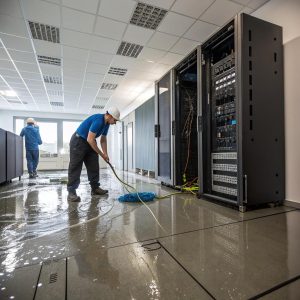
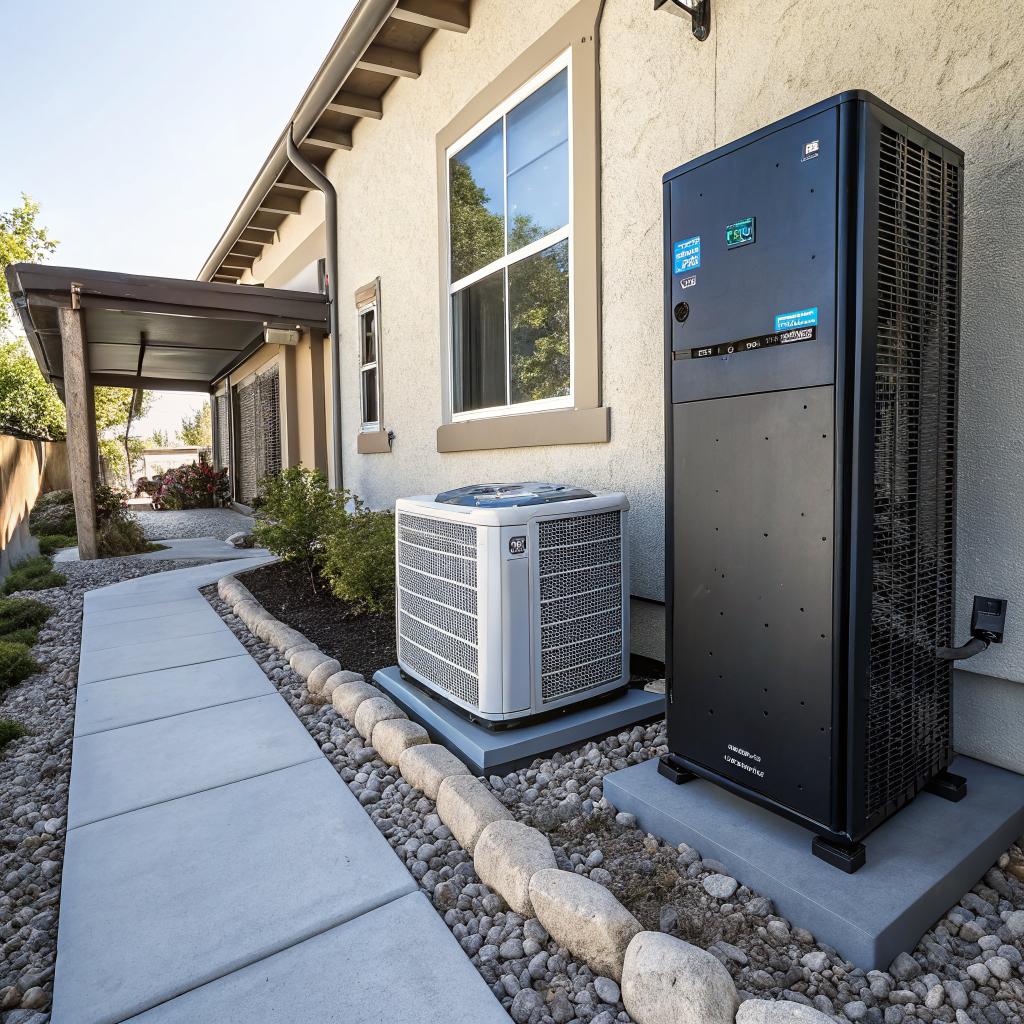

Most people think a smart home is just a few Wi‑Fi bulbs and a voice assistant, but the real gains start when you treat your place a bit like a tiny data center. If you live in a hot, dry city like Albuquerque and you care about your home server, your comfort, and your power bill, the blunt answer is this: pairing a modest smart home server with a modern, right‑sized AC replacement makes more technical sense than any single “smart gadget” you can buy. If you are already running a NAS, a home lab, or a small rack, planning your next AC so it keeps your hardware cool and your energy use predictable is much more than a nice extra. It affects uptime, noise, and in some cases even the stability of the apps and services you host. For local readers, that might even mean planning your home network around your next air conditioning replacement Albuquerque project, not the other way around.
So the short version is: use a low power home server as the “brain” of your smart home, connect it to your thermostat, sensors, and AC, track your temperature and energy use, and let that data guide your AC sizing and configuration. That is the technical core. The details are where it gets interesting, and where a lot of people quietly get it wrong.
Why your AC and home server actually depend on each other
I used to think HVAC was just a comfort thing. You set a temperature, the system runs or not, and you move on. After I built a small home lab, I noticed something very basic: my server fans told me more truth than the wall thermostat did.
The room with my server rack felt fine to me, but my fan curves said otherwise. Drives ran hotter in the afternoon, containers felt sluggish, and my UPS battery temperature went up on long, hot days.
Your AC is part of your hardware environment in the same way your router, UPS, and power strips are. It just lives on the other side of the drywall.
If you are into hosting, self‑hosting, or digital communities, your home infrastructure probably matters to you more than average. So there are a few questions worth asking before or during an AC replacement:
- Where is your server or NAS physically located?
- How does air move through that room when the AC runs?
- Do you keep the door open, closed, or “mostly closed but not really” like many of us do?
- Do you see temperature swings in your monitoring graphs during peak sun hours?
If you do not monitor anything yet, stick with me, because this is where a smart home server fits in neatly.
What “smart home server” actually means in this context
People mean different things when they say “home server.” Sometimes it is a spare laptop in a closet. Sometimes it is a proper rack with redundant power. For the context of AC and infrastructure, I am talking about a small box that:
- Runs 24/7 quietly
- Hosts your core services like Home Assistant, a dashboard, monitoring tools, or a small wiki
- Consumes less power than your AC condenser by several orders of magnitude
- Gives you good observability of your environment and power use
This could be:
Common home server options
| Hardware type | Power draw (rough range) | Good for | AC interaction |
|---|---|---|---|
| Raspberry Pi / small SBC | 5 to 15 W | Home Assistant, light automation, simple dashboards | Almost no extra heat, easy to place near thermostat or router |
| Mini PC / NUC | 10 to 40 W | Self-hosting apps, light VMs, small lab | More noticeable heat in small rooms, benefits from stable AC |
| Tower server / old workstation | 60 to 200 W+ | Multiple VMs, containers, media server, heavier lab | Acts like a small space heater, can affect room balance and AC cycling |
The exact hardware is less important than the idea: you want a reliable point in your house that talks to:
- Your smart thermostat or smart relay on a dumb thermostat
- Temperature and humidity sensors in key rooms (including near your server)
- Smart plugs or sub‑meters on big loads that matter to your bills
- Your router or firewall for network health and uptime alerts
Once you have that, your AC replacement stops being a blind process. You are not guessing about comfort anymore. You are reading data from your own space.
Why Albuquerque homes need a different AC mindset
If you are in Albuquerque, you already know the climate is dry, with hot summers, big day‑night swings, and a mix of old swamp coolers and newer split systems still scattered around town. That mix is the first practical detail that affects how your home server and AC interact.
Evaporative coolers behave very differently from standard AC. They add moisture to the air, rely heavily on outside air, and often leave some rooms much hotter or colder than others. When you replace one with a standard AC, you change not just comfort but also airflow patterns in your house.
The second you replace an old cooler with a new AC, your home lab stops living in the same thermal world it was built in.
Some patterns in Albuquerque that matter from a tech perspective:
- Many older homes were not insulated with continuous AC use in mind.
- Attic temperatures in summer can climb far above outdoor air, which can cook any poor router or switch you stashed up there.
- Rooms on the west or south side can be brutal in late afternoon, pushing your hardware to higher temperatures right when power prices can be touchy.
- Garage or storage setups feel convenient for noise, but they are often the worst possible places for electronics in summer.
So if you are planning or already doing a replacement, you can treat this as a chance to reorganize your home infrastructure, not just the vents and ducts.
Planning AC replacement with your home server in mind
People often start with “How many tons do I need?” or “Can I just match the old system size?” From a technical standpoint, that is a lazy starting point. For someone who runs a home server, the better questions are closer to:
- Where can I place my hardware so it sees stable temperature and airflow?
- What room will be the “control center” of the house, in terms of sensors, thermostat, and router?
- Can the new AC keep that specific room within a tight temperature band without short cycling?
Short cycling is when your AC turns on and off too often. That has two big side effects:
- You get temperature swings that are more obvious in small, insulated spaces with hardware.
- Your energy use patterns become spiky, which can annoy you if you care about graphs and load profiles.
Here is roughly how your planning process can look if you take your server into account.
Step 1: Map your hardware and hot rooms
Walk through your house and sketch, even by hand, where you have:
- Your main router and modem or ONT
- Your server, NAS, or lab gear
- Key workstations and desktops that stay on for long hours
- Rooms where people work or game most of the day
Then compare that with:
- Which side faces the hottest sun
- Which rooms feel stuffy or warm on hot afternoons
- Where older supply vents and returns are located
You will probably notice some mismatches. For example:
- Your server tucked into a west‑facing office with a single vent
- A big gaming PC under a desk in a room that is already the hottest zone
- A router in a hallway with no nearby return grille, so it sits in a weird pocket of air
You do not need a perfect plan yet. Just write down the obvious conflicts.
Step 2: Add simple sensing before replacement
If you still have time before replacement, this is the fun part for a tech‑minded person.
You can drop:
- One or two Zigbee or Wi‑Fi temperature sensors in problem rooms
- One sensor near your server intake, but not touching the chassis
- One near the thermostat, to compare wall reading with room reading
Then, on your home server, run something simple like:
- Home Assistant with the sensor integrations
- Prometheus with Node Exporter and exporters for your NAS or router
- Grafana for dashboards
If you are not a monitoring person yet, you can even use just Home Assistant built‑in dashboards. The point is to collect at least one to two weeks of data where you can see:
- How your room temperatures rise and fall across the day
- How your server CPU and drive temps follow those curves
- When your existing AC or cooler cycles compared to that
Treat those graphs like a mini load study for your house. You are not guessing how hot that room gets at 5 pm in July; you are measuring it.
Step 3: Talk to the installer with actual numbers
This part is often skipped. People hope the technician will magically read their mind about hot rooms and hardware, and then complain later.
You do not need to show every dashboard, but you can:
- Print or screenshot a simple temperature chart of the rooms that matter.
- Highlight the biggest swings and mention any gear you have in there.
- Ask directly about supply register placement, return placement, and static pressure for those zones.
For example, you can say something like:
“I have server equipment in this office that stays on 24/7. It runs 5 to 8 degrees hotter during late afternoon. Can we review how much air this room will get, and whether the new system will avoid big temperature swings here?”
This kind of question is technical enough that it signals you actually pay attention, but not so deep that it turns into a lecture.
If you plan a ducted system, ask whether the run to that room can be adjusted or balanced. If it is a ductless mini‑split for an office or lab, talk about where the indoor unit will blow and where your racks or desks will sit. You do not want cold air blasting directly into hard drives or onto a microphone, but you want good circulation.
How a smart home server can control and monitor your AC
Once the new system is in, you have two main paths:
- Let the thermostat do its default job and just monitor everything.
- Put your home server in the control loop, within reason.
I think many people jump too quickly into “smart” control and automations without understanding the baseline behavior. A more careful approach is:
Phase 1: Observe the new normal
For the first few weeks after replacement:
- Keep your thermostat schedule simple.
- Log room temperatures and humidity with your sensors again.
- Watch how long cycles last and how stable your key rooms feel.
On your server, compare:
- Average CPU temp before vs after
- Drive temps before vs after
- Any differences in fan noise during peak heat
If your graphs show:
- Longer, steadier cycles
- Smoother room curves
- Lower hardware temps
then the new system is probably sized and installed reasonably. If, on the other hand, your AC short cycles more and your rooms still spike, that is a sign you should talk to the installer again before the season gets away from you.
Phase 2: Gentle automations
Once you understand the baseline, you can let your server help.
Some examples that stay within a safe range:
- When outdoor temperature climbs past a set point and the server room rises 2 degrees above the house average, lower the setpoint by 1 degree earlier in the afternoon to “pre‑cool” before the real heat hits.
- When your UPS or NAS temperature passes a threshold, send a mobile alert and mark that time on your dashboard to track patterns.
- Link occupancy sensors to small, local fans in your office, so your AC does not have to work as hard just to keep you happy at your desk.
What you should avoid, at least at first, is a hyperactive script that constantly flips the AC setpoint up and down. That can confuse some systems and just trades one problem for another.
The goal is not to outsmart the thermostat every minute. The goal is to make small, informed tweaks based on the data your home server already has.
Energy use, power bills, and why tech people should care
Many readers on a hosting or tech site already care about power draw. You might have budgeted wattage for your rack, chosen low TDP CPUs, or moved from spinning drives to SSDs for both speed and power reasons.
Your AC is a different league of power, but it touches the same bill and sometimes the same circuits.
Here is a simple comparison for perspective.
| Device | Power draw (approx) | Daily runtime | Energy per day |
|---|---|---|---|
| Home server (NUC, VM host) | 25 to 40 W | 24 hours | 0.6 to 1 kWh |
| Gaming PC during use | 300 to 500 W | 3 to 5 hours | 0.9 to 2.5 kWh |
| Central AC (3 ton) | 2,500 to 3,500 W | 5 to 10 hours (summer) | 12.5 to 35 kWh |
Your home server almost disappears in that chart. But its temperature, and sometimes its uptime, rides on the big load.
By logging AC run time, start and stop events, and maybe a smart meter or smart plug on the air handler, you can:
- See which thermostat schedules actually reduce usage
- Find out if leaving the house a bit warmer during the day saves much, or not
- Catch weird patterns that might hint at a refrigerant problem, clogged filter, or duct leak
This is similar to monitoring response times and error rates on a web app. You do not stare at the numbers all day, but when something feels off, you can check the graphs instead of guessing.
Hardware placement: keep your “home data center” sane
While talking about smart AC control is fun, the simpler wins are physical.
Where to put your server in an Albuquerque house
Try to avoid:
- Garages, except for short‑term test setups
- Attics entirely, unless you are ready to pay for serious insulation and ventilation
- Unconditioned sheds or sunrooms
Better choices:
- A small interior office with a supply vent and a return path to the main system
- A bedroom near the center of the house that stays relatively stable
- A hallway closet that has louvered doors and some airflow, with no big heat sources
From there, your job is to:
- Keep cables sane so you can actually open doors and not trap heat
- Leave a bit of space around the server for airflow on all sides
- Watch humidity, especially if you changed from evaporative to refrigerated AC and the indoor humidity is now much lower
If you use a rack, do not park it directly under a supply vent. You want the room to cool, not one specific cable run.
Smart thermostat choices for tech‑minded users
A lot of people just take whatever thermostat the installer brings. If you like control and data, that is a missed chance.
You can roughly split thermostats into:
- Closed, brand‑locked smart thermostats
- Open‑ish devices with local APIs or integrations
- Dumb but reliable thermostats you can pair with relays or other gear
For a home server setup, you probably want something that:
- Reports data in real time to your home server
- Accepts remote setpoint changes through a documented API
- Still works if your internet is down
The last part is not just a comfort thing. If your routing lab experiment breaks your home internet, you do not want to lose control of your AC on a 100 degree day because the thermostat cloud is unreachable.
So when you talk to your installer, ask clearly:
“Does this thermostat have a local API or a supported integration for Home Assistant, or will I be stuck with your app only?”
If the answer is vague, do some homework or bring your own model that you know has good community support.
Security, networks, and putting your AC on your LAN
Any time we add a “smart” anything to a home, security should at least cross our mind. HVAC gear is no different.
Some simple ground rules for a tech‑aware home:
- Use a separate VLAN or IoT SSID for thermostats, cameras, and sensors.
- Avoid exposing your thermostat or Home Assistant instance directly to the internet without a reverse proxy, authentication, and sane access rules.
- Keep firmware updates on a schedule that matches how critical the device is.
I know people who want to access their thermostat directly from outside without any middle layer. In my view, that is not worth the risk or the hassle. Using a VPN back into your home, or a secure reverse proxy, is a cleaner pattern.
For your home server, that may be the same box where you already run:
- A VPN server like WireGuard
- A small reverse proxy stack like Nginx or Caddy
- Authentication services that sit in front of your tools
In that case, your thermostat becomes just another entry on your “services” list, like your Git instance or photo library, not something special.
What about people in apartments or rented places?
If you rent in Albuquerque, you might not control when or how the AC gets replaced. That changes the equation a bit, but the smart home server still has a role.
More limited options, but still useful:
- Add room sensors and log temperature changes with your server.
- Use smart plugs on portable units or fans, if allowed, to help with hot spots.
- Benchmark how bad the heat gets around your equipment before you decide how big a lab you want to run.
You probably do not want a 400 W lab in a poorly cooled, upstairs apartment with a weak shared system. In that situation, a low power single board computer server with heavy use of external cloud hosting might make more sense.
This is one of those cases where I disagree with some “self‑host everything” people. If your living space cannot keep hardware in a reasonable thermal envelope, sometimes a mix of local and remote hosting is better than forcing a full stack into a hot corner of a small unit.
Common mistakes when mixing AC and smart home servers
To make this more concrete, here are some patterns I have seen or read about that tend to backfire:
Overbuilding the home lab without measuring temperature
Someone adds more drives, a bigger server, some PoE switches, and sticks them all in a closet with a vent that never really blows much. In spring, everything looks fine. Then July comes, the room temperature climbs, and drive failures or throttling start.
The fix is boring but real:
- Measure closet temperature and humidity.
- Keep the door open more often or add a transfer grille, if you own the place.
- Move some gear out or scale back if the room will not stay cool.
Letting the thermostat live in a weird microclimate
The classic “thermostat on a hot wall” problem. If your wall unit thinks the house is warmer or cooler than it really is, your AC cycles and your hardware temps both suffer.
If you cannot move the thermostat easily, your server can help by:
- Tracking the delta between the thermostat reading and nearby room sensors.
- Presenting that on a dashboard so you know, on average, how off the main reading is.
- Guiding small schedule tweaks that offset the bias, even if they are not perfect.
Going full automation before understanding the HVAC system
I know the urge to script everything, especially if you enjoy home automation. But AC systems are not microservices. They have mechanical wear, refrigerant, and airflow limits.
Practical suggestion:
- Spend at least one full hot month watching how the system behaves before doing anything fancy.
- Start with read‑only logging and dashboards.
- Then add slow, predictable control logic: simple schedule tweaks or mild pre‑cooling.
Thoughts on redundancy and uptime for home infrastructure
People on tech forums often talk about “five nines” and such in the context of servers and hosting. At home, it is a bit different, yet the AC replacement ties into uptime in a real way.
What actually hurts your uptime at home is less about CPU failures and more about:
- Power outages
- Network provider issues
- Overheating throttling or crashes
You cannot control the grid, but you can:
- Use a UPS sized to give your core gear a graceful shutdown window.
- Keep your hardware in conditioned space that the new AC can actually hold within spec.
- Alert yourself quickly if temperatures go out of range, before damage happens.
If you run community servers, small public services, or host things for friends, this mix of HVAC and home server planning gives you quiet reliability gains you might not see until that first long heat wave.
Q & A: Common questions about smart servers and AC in a place like Albuquerque
Q: Do I really need a smart home server just to manage my AC?
A: No. Your AC will cool the house with a normal thermostat. The server matters if you care about monitoring, data, and coordinated control for more than one thing. Many people enjoy having one place to watch temps, power use, and uptime for all their gear, not just the AC.
Q: Will my small home server heat up the room enough to change AC sizing?
A: For most people, not by itself. A 30 W server is small compared to the sun hitting your walls and windows. But when you add a gaming PC, multiple displays, switches, and other electronics, the combined heat load can matter for how uncomfortable a room feels and how often the AC runs.
Q: Is it a bad idea to put my server rack in the garage if my new AC is strong?
A: In a hot, dry climate, a standard residential AC does almost nothing for the garage unless there are dedicated ducts, which is rare and can even be against code in some cases. Garages can be far hotter than the house. For hardware you care about, the garage is usually a poor place without extra cooling.
Q: Should I try to directly control the AC cycles from my server instead of using the thermostat logic?
A: In most homes, no. The thermostat and AC controls are built with mechanical and safety constraints in mind. Your server should nudge setpoints or schedules, not try to bypass safeties or force rapid cycling.
Q: How long should my AC run per cycle if it is right sized?
A: There is no single perfect number, but many systems are happier with moderate cycle lengths, not constant short bursts. On a hot afternoon, runs of 15 to 20 minutes or longer are usually a sign the unit is working steadily. If it flips on and off all the time, that can hint at oversizing or other problems.
Q: Can I log AC behavior without a fully smart thermostat?
A: Yes. Some people use smart plugs on air handlers, relay sensors, or even current clamps on the condenser circuit (done by or checked with a qualified person). Your home server can log those signals as simple on/off or power curves, then you line them up with room temperatures.
Q: What is the most practical first step if I want to tie my AC replacement and home server together?
A: Start with room sensors and a basic monitoring stack on your home server before the replacement. That way, when you talk to an installer, you are not quoting feelings or vague memories, you are showing how your rooms actually behave. From there, you pick a thermostat that talks to your server and you grow at a pace that fits your interest.