
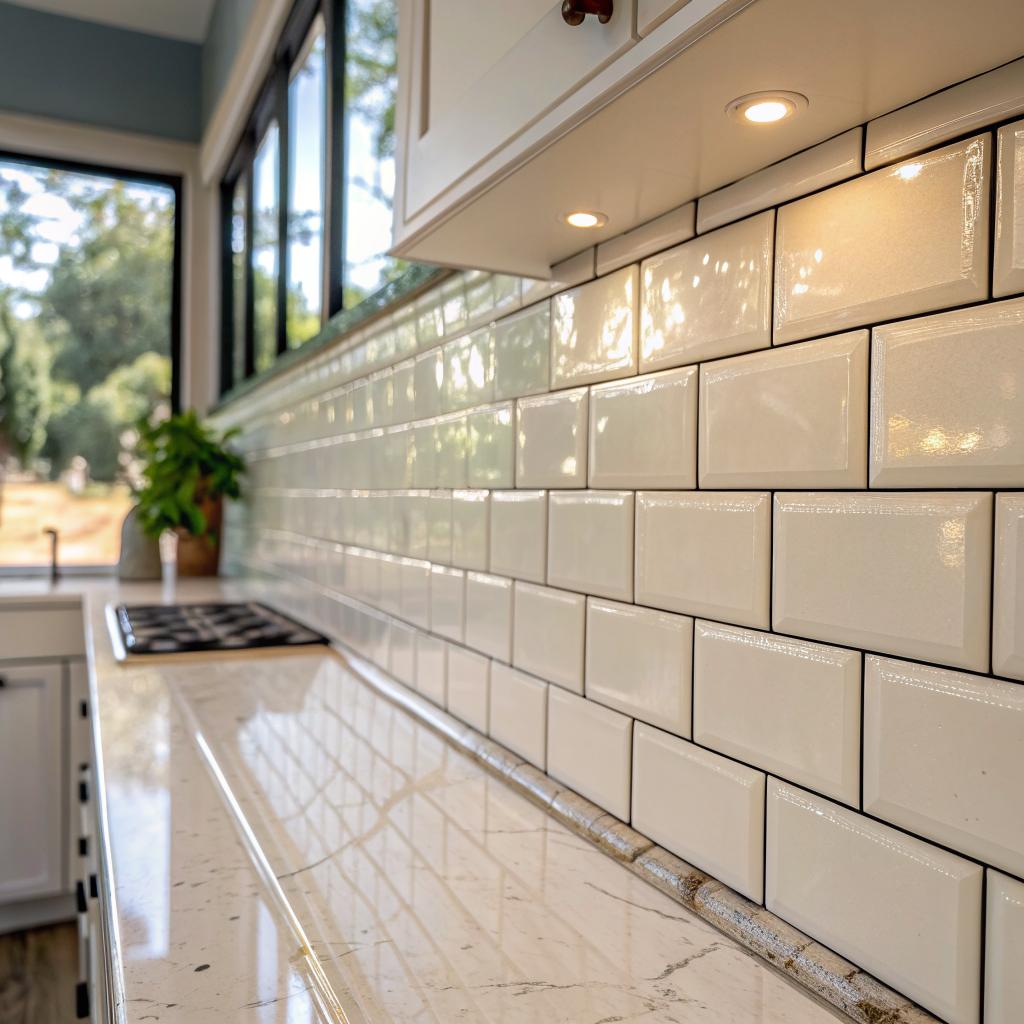

Most people think tile is just background, especially in a room you barely show on camera. But I learned the hard way that the wrong backsplash can kill the whole look of a setup, even if you have a 4K camera and perfect lighting. That is where a simple, quiet choice like a cream zellige tile backsplash changes everything. It is one of those upgrades that looks small on paper but feels very obvious once you see it on screen.
The short answer to why so many tech creators lean toward cream zellige is fairly technical. The soft, neutral tone plays nicely with skin tones and product colors, the slightly irregular surface breaks up harsh reflections, and the subtle color variation stops cameras from banding or struggling with white balance. In plain terms, you get a backdrop that looks clean and bright, but not flat or clinical. That helps a lot if you film tutorials, host live streams, or share photos of your gear and setups.
Why a backsplash even matters in a tech focused space
If you build websites, host communities, or run a small hosting or SaaS business, your audience probably meets you in just three places:
- Your site or app
- Your social channels
- Your video calls or content
For many people, the background in your content quietly shapes how they feel about you. Not in a big dramatic way. More in a low level, subconscious way.
The kitchen or office corner behind you often does at least three jobs at once:
Your backsplash becomes part of your personal “UI” on screen, the fixed interface around you that never changes even when your content does.
If that interface is messy, or if it competes with your face, viewers feel a tiny bit distracted. They might not know why. They just click away faster or do not finish the video.
A cream zellige tile backsplash keeps that visual noise low:
– The color is calm.
– The finish is reflective but not mirror like.
– The variation between tiles gives texture without stealing attention.
You can think of it almost like picking a good code editor theme. Too bright and your eyes hurt. Too flat and it feels dull. The sweet spot is a neutral that makes everything else easier to see.
How cream zellige behaves on camera
Most tech creators care more about their camera and lens than their walls. That is normal. But the camera only records what is in front of it. And some surfaces are just easier for sensors to handle.
Light, reflection, and real world shooting conditions
If you have ever tried to film in a white kitchen with glossy subway tile, you probably saw:
– Hot spots from overhead lights
– Strong streaks from window reflections
– Harsh contrast that your camera auto exposure fought against
Cream zellige tiles change that behavior in a few small but useful ways.
- The color is off white, so it bounces light but does not blow out as hard as pure white.
- The glaze is a bit irregular, so reflections scatter.
- The tiny surface ripples add micro shadows that give depth instead of flat glare.
That combination creates a softer light field behind you. Your face often looks better because the background is not fighting for attention.
If you stream on Twitch, record webinars, or run paid workshops for your community, that softness helps viewers keep their focus where it belongs. On you, not on the shiny tiles behind you.
How cameras read neutral backgrounds
Most phones and cameras today try to correct exposure and white balance automatically. They guess what “neutral” should be. A pure white wall can trick that system and sometimes leads to:
– Slightly gray skin tones
– Washed out product colors
– Color shifts when you move
A cream background behaves more like a mid tone. It gives the camera a better reference. Skin often looks warmer and more natural.
For tech content where your hands and screens are always in frame, a calm mid toned backdrop lets your camera work less and your subject stand out more.
If you show laptop screens, E Ink readers, or phones, the cream tiles give enough contrast without creating heavy halos around bright displays.
The visual brand effect for tech creators
Tech and hosting people tend to think about brand in terms of logos, typography, and color on their site. The physical environment comes last, or never. That is a mistake.
If you look at successful YouTube channels or indie SaaS founders who post a lot on X or LinkedIn, you will notice something. Their spaces look consistent. Their background becomes part of their brand.
Soft tech, not cold tech
There is a tension in this world. You want to communicate that you know your stuff, that you understand servers, latency, APIs, front end frameworks, all of it. But a cold, all white, almost lab style background can feel uninviting.
Cream zellige sits in a middle ground:
– It looks clean, so it fits the tech vibe.
– The handmade feel of the tiles adds a hint of warmth.
– The slight color variation feels more human than a flat painted wall.
For people running digital communities, that mix matters. You are not only selling features. You are inviting people into a space they trust.
A cool thing I noticed is that when creators film in a kitchen with cream zellige behind them, viewers often comment on the space without fully knowing why they like it. They just say things like “Your setup feels calm” or “This looks cozy but still modern.” Those reactions help engagement more than another RGB light strip.
Background hierarchy and on screen focus
When you design a landing page, you think about hierarchy:
– Main headline
– Supporting text
– Buttons
– Backgrounds
The same logic applies to your video frame.
In a good frame, your face is the H1, your mic and gear are the H2, and your backsplash is the background color layer of your CSS.
A cream zellige tile backsplash works because it naturally falls into that lowest level of hierarchy. It creates structure but does not compete.
Harsh patterns or dark, glossy tiles can sometimes catch the eye more than your face. That is fine for an interior design video. It is not great if you are trying to explain containerization or community onboarding flows.
Comparing cream zellige with other common backdrop choices
To keep this practical, here is a simple table. It compares cream zellige with a few other surfaces tech creators often have behind them.
| Background type | Look on camera | Lighting behavior | Brand feel |
|---|---|---|---|
| Plain white painted wall | Very clean but flat, can look sterile | Prone to overexposure and hard shadows | “Corporate”, sometimes cold |
| Dark painted wall | Dramatic, strong contrast | Can force cameras to raise ISO, more noise | Moody, sometimes too intense |
| Patterned backsplash tile | Busy, pulls attention | Complex reflections, distracting lines | Good for decor channels, not always for tech |
| High gloss white tile | Very reflective, sharp highlights | Shows window and light sources clearly | Ultra modern, can feel rigid |
| Cream zellige tile | Soft, textured, warm neutral | Breaks up reflections, gentle glow | Modern but approachable |
The table is not perfect. A skilled cinematographer can make any of these work. But most creators are recording between client calls or coding sessions, often with a half charged camera battery. You want a backdrop that looks good with minimal effort, not a fragile setup that only works under very controlled light.
The practical side: living and working with cream zellige
I do not think decor choices should only be about the camera. You also live in the room. You cook there, or you make coffee between sprints. Sometimes you put a sticky note on the tile and then forget it is there on camera.
Maintenance and cleaning for real life schedules
Most tech people I know are not looking for a high maintenance kitchen. They want something that can handle:
– Coffee splashes
– Sauce accidents
– Kids touching the wall with random mystery substances
Glazed zellige is easy to wipe down with a damp cloth. The cream color hides small streaks better than glossy white. You do see grout lines, so choosing a practical grout color helps.
One small real world benefit is that your backsplash looks less dirty on camera between cleans. Dark grout with cream tiles can mask stains, so your background still looks presentable in a quick Zoom call.
How it works with gear and props
If you film product shots or tutorial videos in your kitchen, you probably place gear on the counter:
– Laptops
– Mechanical keyboards
– Phones
– Microphones
– Camera gear
The cream backdrop cooperates with all of them. Black or silver devices stand out clearly in front of it. Colorful accessories like coiled cables, artisan keycaps, or branded mugs pop without clashing.
Think of cream zellige as the neutral background in your product photos, like a studio sweep that just happens to be your actual wall.
You can change your desk mat, your mug, your plants, your books, and nothing feels out of place. The tiles do not lock you into one aesthetic the way, for example, a bold colored wall might.
Tech community angles: from personal brand to remote culture
Someone might say: “All this decor talk is fine, but I run a web hosting business. Why should I care about tiles?”
I think there are a few reasons, some more obvious than others.
Remote team presence
If your team is remote, your colleagues often only see each other in small video squares. Backgrounds become part of how people read each other.
A few practical points here:
- A calm, neutral background lowers visual friction in group calls.
- Clients see a stable, cared for space instead of a chaotic one.
- Your own focus improves when your environment is visually simple.
You do not have to standardize everyone on zellige, that would be strange. But if you are planning a kitchen or office renovation at home, it is not silly to think about how that investment supports your on screen presence.
Content for your hosting or SaaS audience
If you publish:
– YouTube updates about new features
– “Town hall” calls for your community
– Live coding streams
– Behind the scenes setup tours
Your background quietly says “This is how much care I put into my work.” A cheap, peeling backsplash or a noisy pattern sends a different signal from a timeless, consistent one.
You might not care about that signal. Your audience probably does, at least a bit. People connect small cues. They assume that someone who cares about details in their space might also care about small details in their hosting stack, security setup, and support.
I would not push this too far, though. A nice tile wall does not fix slow servers or bad documentation. It is just one more piece of the picture.
Design flexibility for different tech personalities
Not all tech creators want the same vibe. Some want minimal and sharp. Others prefer a softer, more lived in look. Cream zellige does not force a single style, which is part of why it shows up in so many different kinds of content.
If you prefer a minimal, almost “server room” aesthetic
You might worry that cream is too warm or too “homey.” That depends on what you pair it with.
For a cleaner, more technical feeling space, you can combine cream zellige with:
- Matte white or light gray cabinets
- Stainless or black hardware
- Simple open shelving with very few items
- Cooler color temperature lighting, around 4000K to 5000K
The tiles still soften the harshness a bit, so your setup does not look like a bare collocation center. You get order without stiffness.
If you want a warm, community friendly vibe
For people who run communities around creative coding, bootcamps, or indie hacking, a warmer look can be nice. The same cream tiles lean more cozy if you add:
- Wood shelves and cutting boards
- Plants with trailing leaves
- Warm white bulbs around 2700K to 3000K
- Textured ceramics and textiles in view
That setup looks great on camera for AMAs, Q&A streams, and casual build in public sessions. It reads as relaxed but still intentional.
Practical tips if you are considering cream zellige
If you are actually picking tile right now, the details matter more than the idea. Here are a few non glamorous questions to think through.
Tile size and layout
Most cream zellige comes in small square formats, often around 4 x 4 inches. That creates a grid behind you. On camera, this grid gives scale.
Some layout thoughts:
- Smaller tiles mean more grout lines, which add texture.
- Larger tiles give a calmer appearance with fewer lines.
- A straight stack pattern feels more modern; a running bond feels more classic.
If you sit quite far from the backsplash in your frame, small tiles can blend into a subtle pattern. If you are close, the individual tiles and their irregularities become more visible.
Grout color and its impact on video
Grout might feel like a boring detail until you see it on screen.
Rough rule of thumb:
– Light grout with cream tiles creates a soft, nearly continuous surface.
– Medium grout adds a clear grid that can add interest.
– Very dark grout creates strong lines that might pull focus.
For tech content, I think a slightly warm, mid light grout works well. It keeps the texture readable without building a heavy grid that draws the eye away from you.
Lighting setup around the backsplash
You do not need a full studio. But if your tiles are in frame often, think a bit about how they interact with your lights.
A few simple guidelines:
- Avoid aiming a strong key light directly at the tiles; bounce it off a wall or reflector.
- Use soft boxes or diffusers to prevent harsh specular highlights on the glaze.
- If you have under cabinet lighting, pick a color temperature close to your main lights.
You can experiment by turning each light on and off while watching your camera feed. Look for hotspots, banding, or color shifts across the tiles.
When a cream zellige backsplash might not be the right choice
I do not think any design choice fits everyone. Cream zellige has drawbacks too, and it is better to be honest about them.
If you rely heavily on green screen
Some creators prefer a completely blank wall or a dedicated green screen behind them. If your style involves swapping digital backgrounds often, a textured tile wall is just clutter.
In that case:
– A solid color wall is easier to mask.
– Tiles can introduce tiny variations that complicate keying.
– The cost of zellige does not translate into visible value if you hide it digitally.
If your space is very dark or tiny
Cream tiles do reflect light, but if your kitchen or office nook has no natural light and very low ceilings, you might find that any textured surface feels cramped.
A few signals that cream zellige might not work:
- Your only light source is a single dim bulb.
- The room height makes wall texture feel too close on camera.
- You prefer a very flat, studio like look.
In those situations, a smooth painted wall or large format tile could give a cleaner result.
How all this connects back to your tech work
It might still feel strange to tie tiles to web hosting, digital communities, or tech products. But the more work moves online, the more the edges blur between “home” and “office,” between “kitchen” and “set.”
If you are:
– Selling hosting plans to creators
– Running a forum or private community
– Shipping a SaaS that lives entirely in the browser
Your personal setup often appears in marketing material, help videos, and community calls. A space that looks stable and warm builds trust.
Most of your users will never see your servers or your codebase, but they might see you sitting in front of a backsplash seven times a week.
That mental link is not rational, but it exists. Human brains connect what they see with what they expect from you.
You do not have to chase trends or turn your home into a studio. But if you are already thinking about a renovation or a new rental, choosing a cream zellige tile backsplash can quietly support the story you want your content to tell.
Questions and answers about cream zellige for tech creators
Does cream zellige make a difference if I only use a webcam?
Yes, but not in a magical way. The tiles will not fix a bad camera, but they give your webcam an easier scene to handle. Less glare, a calmer background, and better color reference usually make even modest webcams look a bit more polished.
Is it too trendy, will it look dated in a few years?
Trends always move, and zellige is definitely popular right now. Cream, though, is a pretty stable neutral. Even if the hype shifts, a soft, light tile tends to age better than strong colors or complex patterns. And cameras will still appreciate a textured neutral surface in five or ten years.
Should I pick cream zellige only because other creators use it?
No. That is not a strong reason on its own. If you like how it looks both on screen and when you are just making coffee, then it is a reasonable choice. If you feel indifferent or if you prefer a darker, more focused look, do not force yourself to copy anyone. Your environment should help you work and create, not just match a trend.