
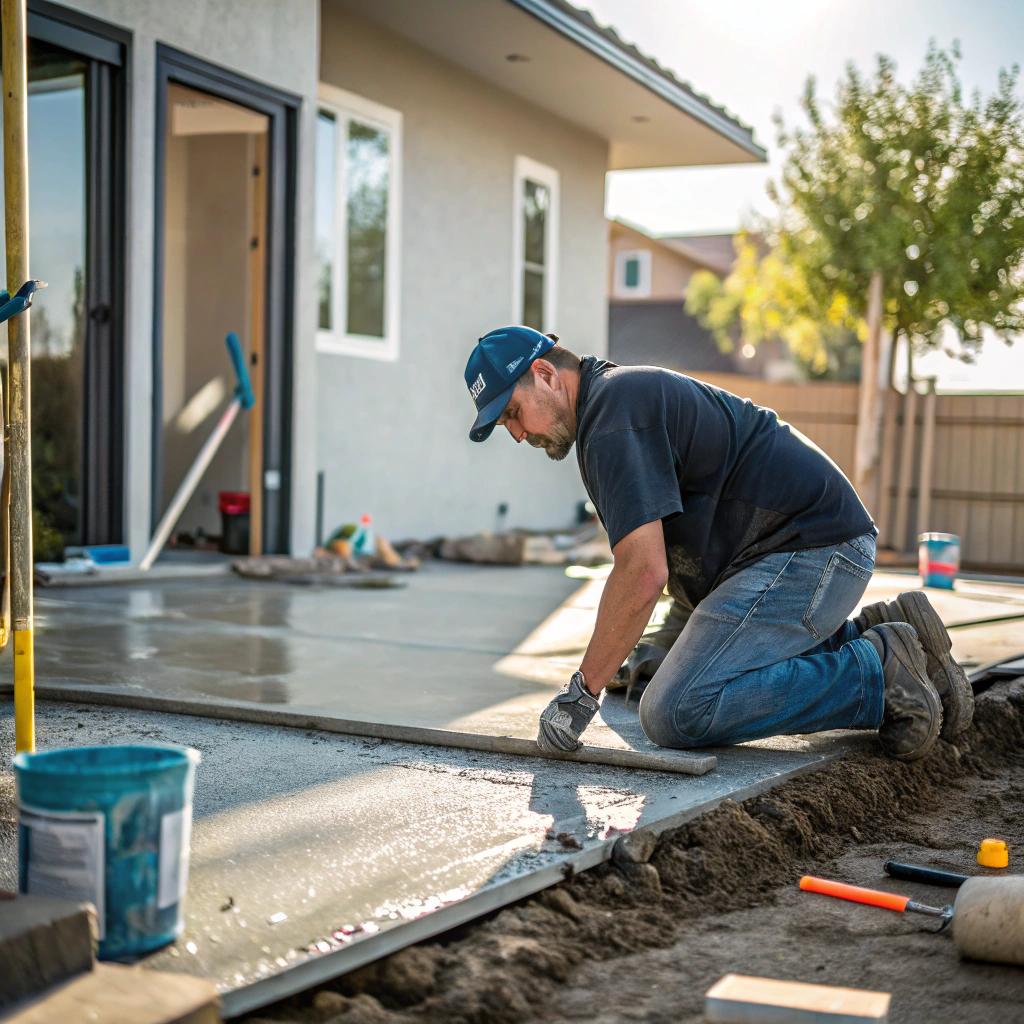

Most people think concrete work is just brute force and guesswork with a wheelbarrow, but the tech crowd tends to see it differently. If you are used to uptime charts, ping times, and version control, you probably care more about process, data, and predictability. That is the real reason many tech‑savvy homeowners end up trusting good concrete contractors more than they expected: the best ones already run their crews almost like well managed dev teams.
The short answer is this: when concrete work is done well, it looks a lot like clean engineering. There is planning, specs, site testing, mix design, curing schedules, and quality checks. The better contractors use laser levels, 3D layouts, moisture meters, and sometimes project management software. So if you think in terms of systems and reliability, a serious concrete pro feels safer than a DIY experiment or a random handyman. You get fewer unknowns, better performance over time, and a structure that handles real‑world “load” the way a good backend handles traffic spikes.
Why concrete feels surprisingly familiar to people who live online
If you host websites, run communities, or manage apps, you already manage risk every day. You worry about:
- Downtime
- Bad deploys
- Security bugs
- Unexpected traffic spikes
Concrete work has a very similar tension. You have one “deploy” window when the truck arrives. If the mix is wrong, the formwork is off, or the grade is miscalculated, you do not roll back with a quick patch. You live with the bug for years or you pay for a very messy refactor with jackhammers.
That is one reason many technical people end up saying something like:
I am fine tinkering with a home server, but I will not pour my own structural slab. The blast radius is too big if I make a mistake.
You might do your own smart lighting, your own router config, and your own NAS. Fine. But the ground your home sits on, the driveway your car uses every day, or the pool deck that needs to stay safe and slip resistant, those pieces behave more like production infrastructure than a weekend side project.
The “infrastructure mindset” applied to your house
Think about your home as a kind of physical infrastructure stack:
| Layer | Home example | Tech analogy |
|---|---|---|
| Foundation & slabs | Footings, basement floor, garage slab | Physical servers / data center floor |
| Hard surfaces | Driveways, patios, walkways, pool deck | Network layer and load balancers |
| Framing & structure | Walls, beams, stairs | Application architecture |
| Finishes & decor | Paint, tile, furniture, smart devices | UI, front‑end, plugins |
You probably would not trust a random plugin that has not been updated in years to run billing for your SaaS. In the same way, a tech‑minded homeowner is usually careful about who handles the literal ground layer of the house.
What technical people look for in concrete work
When you talk to contractors, you may notice a split. Some talk in vague promises. Others talk in measurable details. If you are used to reading documentation or changelogs, the second type sounds much more credible.
Many tech‑savvy homeowners subconsciously look for things like:
- Clear scope and specs, not just “we will make it look nice”
- Actual measurements for slope and thickness
- Some explanation of the mix and reinforcement
- Evidence that they respect local code and site conditions
I am not saying every good contractor speaks like an engineer. Some do not. But when they talk through the plan and you can sense that they are mapping inputs to outputs, that lands well with someone who configures systems for a living.
You can usually tell in the first 10 minutes if a contractor thinks in systems or just hopes it all works out when the truck shows up.
The planning phase feels like technical discovery
Think about the early meeting as a kind of requirements session. You might go through:
- Use cases: How many cars will sit on this driveway? Any heavy trucks? Kids playing on it?
- Environment: Freeze and thaw cycles, shade vs sun, drainage around the home.
- Load patterns: Occasional heavy use, regular vehicles, or constant foot traffic.
- Future changes: Will you add a carport, an EV charger, a hot tub, or a shed that needs a pad?
A serious contractor then translates this into:
- Thickness and reinforcement details
- Slope and drainage paths
- Control joint layout
- Concrete strength rating and any additives
That is pretty similar to turning product requirements into technical specs. The better that translation is, the fewer surprises show up once the “deploy” happens.
Tools and tech that good concrete contractors actually use
There is a stereotype that trades people avoid tech. Sometimes that is true, but not always. Many modern crews have quietly picked up tools that make sense to anyone who works with data or hardware.
Here are some examples that matter to a homeowner who cares about accuracy:
- Laser levels for grading and slope checks
- Rotary lasers to keep long forms on the same plane
- Moisture meters for slabs under flooring
- Rebar locators when tying into existing work
- Concrete thermometers and maturity sensors on complex jobs
Some contractors also use:
- Drone photos for site overview on large properties
- CAD layouts for complicated patios and pool decks
- Scheduling and project apps to track jobs and crews
You do not need all this tech for a small walkway. But if a contractor has at least some digital tools and can show you readings, slopes, or plans, that transparency feels familiar if you like dashboards and logs.
If a contractor can show you a laser reading or a layout plan instead of just saying “trust me,” most technical people relax a bit.
Specs that matter more than the brand of the truck
Just like you care about CPU, RAM, and network links, there are a few concrete specs worth asking about:
| Concrete spec | What it means | Why you care |
|---|---|---|
| PSI rating | Strength of the mix (for example 3,000 psi, 4,000 psi) | Higher strength resists cracking and heavy loads better |
| Air entrainment | Tiny air bubbles added for freeze/thaw areas | Helps concrete survive winter cycles |
| Reinforcement | Rebar, wire mesh, or fiber in the mix | Controls cracking and load distribution |
| Control joints | Planned weak points cut into the slab | Directs cracking where it is less visible and more manageable |
If a contractor cannot explain these in simple language, that is usually a red flag. They do not need a civil engineering degree. But if they pour concrete every day, they should be able to talk about concrete the way you talk about your hosting stack.
Why DIY concrete often feels wrong to tech people
Many technical homeowners like DIY projects. You might write your own scripts, build a PC, wire low‑voltage networking, or flash custom firmware. Those are all reasonably reversible.
Concrete is different. If a large pour goes wrong:
- You cannot easily “undo” it
- The fix is noisy, expensive, and time consuming
- The damage can spread to other parts of your home or yard
From a risk tradeoff, this is closer to running `rm -rf /` on a production server than testing a new theme on a staging site. Once you see it in those terms, hiring someone who handles this specific risk every day starts to feel conservative, not extravagant.
Where DIY concrete sometimes makes sense
To be fair, not all concrete is equal. Small pads sometimes make sense for a hands‑on owner:
- Very small shed pads
- Temporary steps that may be replaced
- Minor pavers or non‑structural garden borders
These are more like side projects on a homelab. If they fail, the impact is limited. Still, once you start tying into foundations, driveways, structural walls, or pool structures, the cost of being wrong jumps fast.
I have seen a DIY driveway that looked decent on day one. By year two, water had started flowing toward the garage, not away from it. Fixing that meant tearing out almost the entire slab. The owner knew how to manage Kubernetes, but concrete slope tricked him. It was not a skill problem so much as a “you cannot eyeball physics” problem.
How to vet a concrete contractor using your tech instincts
You already know how to choose software or hosting: you read docs, compare features, check uptime, and maybe scan forums for real complaints. Vetting concrete people feels similar if you treat it as a technical decision, not just a vibe check.
Questions that map to your usual thought process
These questions help you see how they think, not just what they say.
- Process
“Walk me through your typical process from demolition to final sealant. What are the main steps?” - Dependencies
“What conditions need to be in place before you pour? What could delay it?” - Failure modes
“If this cracks earlier than expected, what are the usual causes? How do you reduce those risks?” - Maintenance
“What routine care does this slab or patio need over the next 5 to 10 years?” - Measurement
“How do you confirm slope and thickness during the job, not just by eyeballing it?”
You do not need to cross‑examine them. But casual, specific questions triggered by your own curiosity can surface how serious they are.
Reading their “logs”: photos, references, and patterns
Instead of logs and metrics, you get:
- Before and after photos from similar projects
- References from past clients in your area
- Visible work in the neighborhood you can walk by
Look for patterns:
- Do the control joints look straight and evenly spaced?
- Does water stand in low spots, or does it flow away?
- Are edges clean or crumbling?
If you know a little about what to look for, walking across one of their older driveways after a heavy rain can tell you more than any sales pitch.
How concrete projects relate to online communities and hosting
This might feel like a stretch at first, but home concrete work and running web projects share a few themes that matter to technical homeowners.
Moderation vs maintenance
An online community needs moderation. Ignore it, and you get spam, abuse, and people leaving for quieter spaces. Concrete needs maintenance in a similar way. It is not constant work, but it does not thrive in neglect.
Think about how you:
- Patch servers
- Rotate backups
- Review logs
For concrete, your “maintenance loop” is simpler:
- Keep drainage paths clear
- Seal joints and surfaces on a schedule
- Watch early cracks so they do not grow unchecked
A contractor that explains this to you is like a hosting provider that gives you a sensible post‑launch checklist, not just login credentials.
Latency vs slope
You notice latency. You run speed tests and traceroutes. For concrete, slope is your latency. Water needs a path off your driveway or patio. Too flat, and it pools; too wrong toward the house, and you have a real problem.
Ask how they plan to move water. You do not need an exact degree number, but they should talk about drop per foot, where the water will go, and what happens during a big storm. If they look confused, that is similar to a network tech who cannot explain routing to you.
Cost, budgets, and why “cheapest” can be risky
In hosting, “cheapest” is often the least stable. You already know the feeling of a $2 plan that crawls under moderate traffic. Concrete pricing has a similar trap.
The lowest bid often skips:
- Enough thickness for heavy loads
- Rebar or proper mesh
- Site prep and compaction
- A proper base layer of gravel
This is like skipping backups and monitoring to save a few dollars. It works until the first major failure. Then you pay more than you would have paid for a more stable setup.
Thinking in total cost of ownership
You may already think about total cost of ownership for software. For concrete, that looks like:
| Cost area | Cheaper approach | Better long term approach |
|---|---|---|
| Base prep | Minimal grading, thin base rock | Good compaction and enough aggregate base |
| Reinforcement | No rebar, maybe thin wire | Correct rebar spacing and supports |
| Thickness | Less than 4 inches on a driveway | 4 inches or more, sometimes 5 or 6 inches |
| Finish & sealing | Rushed finish, no sealant | Proper finish, curing, and later sealing |
The cheaper solution looks good on day one. The better solution costs more up front but usually wins over 10 to 20 years when you count crack repairs, trip hazards, and potential water intrusion.
How tech‑savvy homeowners stay involved without micromanaging
If you are used to managing projects, you may be tempted to overcontrol the concrete job. That can frustrate a good contractor. The balance is to stay engaged, not intrusive.
Things worth being picky about
You should absolutely care about:
- The scope in the written quote
- Where the slab starts and ends
- Slope direction and where water exits
- Overall thickness and reinforcement plan
- Where control joints will go and how often
These affect safety, durability, and resale.
Things to relax about a bit
You might let the contractor lead on:
- The exact trowel or broom technique
- The specific mixer brand or small equipment
- Minor day‑to‑day logistics of the crew
Trying to run their crew like a software sprint from your laptop can backfire. Let them do their work, but ask for updates at clear milestones: prep complete, forms set, rebar in, pour day, and post‑pour curing checks.
Treat the project like you would treat work with a good dev agency: clear scope, periodic check‑ins, and trust once they have earned it.
Where tech, data, and concrete might go next
This part is a bit speculative, but interesting if you like new tools.
You already see:
- 3D printing experiments with concrete
- More consistent ready‑mix quality control with sensors
- Apps tracking cure times relative to temperature and humidity
Over the next years, homeowners may see more:
- Augmented reality visualizations of patios and walkways
- Standard digital checklists for inspections, shared with clients
- QR codes on contracts that link to care guides and project photos
If that direction continues, the gap between “old school contractor” and “data friendly trade partner” will keep shrinking. For people who live around web tech, that is good news. It means more trades will speak a language that feels closer to what you are already used to.
Common questions tech‑minded homeowners ask about concrete
Q: Do I really need rebar in my driveway if the soil seems solid?
A: Often, yes. Soil that looks solid when you stand on it can still shift under seasonal moisture swings and vehicle loads. Rebar or proper mesh ties the slab together and helps handle those small movements. For very light use or small areas, some people skip it, but the risk tradeoff is usually not worth the small savings if you have cars or delivery trucks using that space.
Q: How long should I expect a properly installed driveway to last?
A: There is no fixed number, but many last 20 to 30 years before major repair is needed, sometimes longer. That range depends on climate, load, drainage, and maintenance. If you see major cracking or settling in under 5 years without some unusual event, something likely went wrong in the design, base prep, or reinforcement.
Q: Is stamped or decorative concrete weaker than plain gray concrete?
A: Not by definition. The strength mostly comes from the mix, thickness, and reinforcement. Stamping is a surface treatment done while the concrete is still plastic. What can change is how the surface handles wear and weather, especially if it is colored or sealed. You will want a contractor who takes curing and sealer choice seriously if you go that route.
Q: Why does my contractor care so much about the weather forecast?
A: Temperature, wind, and rain affect how concrete cures. Too hot and dry, and the surface can lose moisture too quickly, which raises the risk of surface cracking. Heavy rain during a fresh pour can weaken the surface or wash out cement. Good contractors watch the forecast like you watch traffic graphs during a big launch.
Q: Can I walk on new concrete the same day? What about driving on it?
A: Light foot traffic sometimes happens after 24 hours or so, but many pros like a bit more time, especially in colder weather. For vehicles, common guidance is to wait at least a week before driving on it, sometimes longer for heavier vehicles. Strength develops over time as it cures. If you rush it, you can cause micro damage that shows up later as cracks or tire ruts.
Q: If I already work with data and tech, how involved should I be in the concrete design?
A: Be involved enough to understand the goals, constraints, and tradeoffs. Specify how you will use the space, how you want water handled, and any future changes you anticipate. Then ask the contractor to propose the structural details. Your skill in questioning, clarifying, and reading between the lines will help, but then you let their field experience do its job.