
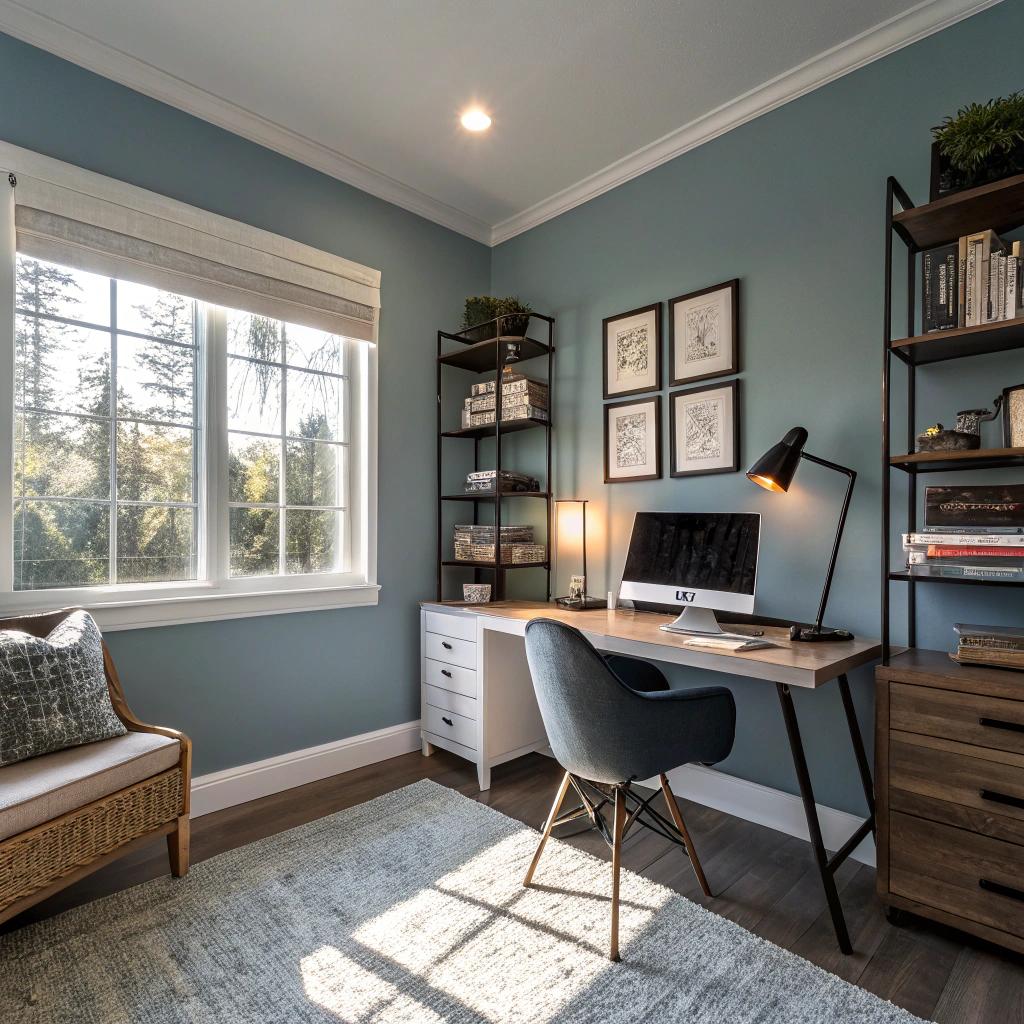

Most people think the home office upgrade they need is a new monitor or a faster laptop, but the thing that quietly wrecks your focus is often your wall color. If you work remotely from Denver and your office is beige, yellowed, or patchy, then hiring a pro for residential painting Denver can upgrade your home office almost as much as a hardware refresh. Fresh, well chosen paint improves focus, reduces eye strain, cuts glare on your screens, and makes video calls look sharper, which is not only nice visually but has real effects on your energy and even how people perceive you online.
The short technical answer is this: the right paint color, sheen, and light reflectance value change how your home office handles natural and artificial light. That affects screen contrast, glare levels, and color accuracy. For someone who lives in technology, runs virtual meetings, or manages servers and communities from home, those small changes add up to a more stable visual environment. Your brain has to work less to compensate, which means more energy for the actual work, not for fighting bad lighting and ugly walls.
It sounds a bit boring, I know. Wall paint is not as fun as a new GPU. But every person I know who upgraded their home office paint before buying more gear said the same thing: they wished they had done it earlier.
How wall color quietly affects your screen, your eyes, and your mood
If you work in web hosting, development, or any online-first field, you stare at screens all day. That is obvious. What is less obvious is that your walls interact with those screens.
Here is where paint starts to matter.
- Walls reflect light back into your eyes and onto your displays.
- Bright or glossy walls increase glare and lower contrast.
- Very dark walls can create harsh contrast that tires your vision.
- Strong, saturated colors can throw off your perception of color on screen.
If you do any kind of UI design, color work for brands, or just care that your product screenshots look correct, those reflections are not harmless. They change how you see whites, grays, and even skin tones on Zoom.
A stable, neutral background gives you more reliable color perception on your screens and reduces visual noise around your daily work.
When painters in Denver talk about “light reflectance value” or LRV, it sounds a bit technical, but it is simply a scale from 0 (pure black) to 100 (pure white). Most home offices work best with something in the 50–65 range. Medium, calm, not too bright, not too dark.
This range keeps the room from becoming a glowing box of reflected light, while still stopping you from feeling like you are inside a cave.
Glare, contrast, and screen comfort
If you have ever tried to read logs, code, or analytics on a monitor while the sun hits a white wall behind it, you know how awful that feels.
Two things usually cause this:
1. High gloss or semi gloss paint near screens
2. Light colors that bounce daylight and LED light straight back at you
In Denver, where the sunlight can be harsh for much of the year, this can be intense.
For a tech focused home office, a better setup is:
- Matte or eggshell sheen on the wall behind and beside your monitors
- A mid tone neutral color that does not blast light back at your face
- Possibly a darker “feature wall” behind your screen to absorb light
If your eyes feel tired but your screen brightness is already low, your walls might be the real problem, not your monitor.
I used to think I needed special “eye comfort” monitor features. They helped a bit, but when I repainted my office from glossy off white to a simple soft gray with eggshell sheen, my eye strain dropped more in one week than any software tweak had in a year.
Color bias and design work
If you do front end work, UX, branding, or even just manage product screenshots, your wall color can bias how you see color on your screen.
Example:
You paint your office a vivid blue because you like it. Looks nice. But when you review a client’s logo that leans teal, it might visually clash with your wall in your peripheral vision. Your brain starts to “correct” the colors unconsciously. You may adjust the design to look better in your room, not in reality.
Is this dramatic? Maybe. But if you make design decisions every day, small influences add up.
Neutral paints like soft grays, balanced greige, or very muted blues and greens keep your visual field calmer. This matters when your job is already visual and detail oriented.
Picking colors that work with Denver light and your tech setup
Denver has strong sunlight, thin air, and quite a few days each year with very bright skies. Colors that look calm on a store sample can feel way brighter once they hit your walls at 2 p.m. on a clear winter day.
When you plan a repaint, do not just pick what looks nice on a Pinterest board. Think about:
- Which direction your office windows face
- How many screens you have and where they sit
- The kind of work you do most (design, coding, writing, support)
- How often you are on video calls
North, south, east, west: how your window affects your paint
Here is a simple overview that helps narrow down colors. I am skipping fancy color theory jargon on purpose.
| Window direction | Light traits | Better wall colors for a home office | Colors to be cautious with |
|---|---|---|---|
| North facing | Cool, steady, slightly dim | Warm neutrals, soft beige, warm gray | Very cool grays that make the room feel cold |
| South facing | Bright all day, can be intense | Balanced neutrals, gentle cool tones | High LRV whites that cause glare |
| East facing | Bright mornings, softer afternoons | Neutrals with mild warmth or green/blue undertones | Very warm yellows or oranges that feel sharp in the morning |
| West facing | Soft mornings, hot glowing evenings | Cool neutrals, muted blues/greens | Reds and strong warm tones that go “neon” at sunset |
If you are not sure where to start, you can still take small steps. Buy sample pots, paint large patches behind your monitor area, and live with them for a few days. Check how your IDE or admin panel looks at 9 a.m., 2 p.m., and 9 p.m. on each sample.
If you hate them all, that is useful too. That usually nudges you toward calmer neutrals, which tend to work well for tech focused rooms.
Color temperature and your lighting gear
Tech people tend to care about numbers. One set of numbers that matter here are color temperature values on your bulbs.
Your paint and your artificial light work together. If the paint is slightly warm and you install very cool white bulbs, your room can feel uneasy and your skin may look odd on camera.
General rule that works in many Denver home offices:
- Bulbs between 3500K and 4000K (neutral white) are often a good match for work.
- Use the same temperature across all overhead lights in the office.
- Add a warmer lamp off camera if you want a softer look during late night calls.
Then choose paint that does not fight this. A balanced greige or soft neutral gray often blends nicely with 3500K light.
If you fix your paint but keep random, mismatched bulbs, your office will still feel off and your video calls will show it.
Paint sheen, texture, and how your walls look on camera
For people who live in digital communities, Zoom, Teams, or Discord video calls are part of daily life. Backgrounds matter. Not in a fake “studio” way, but in a basic clarity and distraction sense.
Residential painting choices control three things that show up on camera:
- How much the wall reflects light behind you
- How much surface texture shows on video
- How clean and sharp edges look around you on screen
Sheen: matte, eggshell, satin and what actually helps
You do not need to know every paint product line. Just know what a few sheens do:
| Sheen | Look | Good for | Less ideal for |
|---|---|---|---|
| Flat / matte | Very low reflection, soft | Walls behind monitors, camera backgrounds | High traffic spots that need frequent scrubbing |
| Eggshell | Slight sheen, still calm | Most home office walls | Rooms with heavy wear by kids or pets |
| Satin | Noticeable sheen | Trim, doors, sometimes cabinets | Walls right behind screens or cameras |
| Semi gloss | Very shiny, reflects a lot | Baseboards, doors, baths, kitchens | Any wall that appears in video calls |
In many home offices, a mix of flat or matte on the wall behind you and eggshell on the side walls works well. It keeps the background soft, clear, and non reflective, which makes your face stand out properly on camera.
Texture, drywall, and camera clarity
If you work with clients, collaborators, or a team across the world, your home office wall is part of your brand. A beat up wall with visible patches, dents, and old cable holes may not ruin your reputation, but it does not help.
When painters prep for a residential job, they usually deal with:
- Nail holes from old shelves or whiteboards
- Hairline cracks near windows and doors
- Uneven patches from DIY repairs
- Stains from coffee, markers, or tape residue
A smooth, well prepped surface does two quiet things for tech workers:
1. Your background looks more professional on calls, even if it is just a plain wall.
2. AI background tools and blur features detect your outline more cleanly, because the system does not have to guess around weird shadows and bumps.
This is one of those details that sounds nitpicky but becomes obvious after the fact. People may stop asking if you are “in the basement” once your background is clear and clean.
Psychology of color: focus, calm, and long coding sessions
If you write code, handle support queues, monitor servers, or manage communities all day, your brain is already juggling a lot. The wrong color on your walls adds stimulation where you do not need it.
Color psychology is not magic, and some of the advice online gets a bit overblown. Still, there are some well known patterns that hold up in day to day life.
Colors that often help focus
- Soft blues and blue grays
These feel calm, work nicely with screens, and often suit analytical work. Light to medium tones tend to be better than very dark navy in a small room. - Muted greens
Pale green can feel stable and easy on the eyes. It breaks up all the gray from hardware without becoming distracting. Good for rooms with plants and natural wood furniture. - Balanced neutrals
Simple grays, greige, or taupes that are not too warm or cool give you a “blank” backdrop. This is often handy if you share the office with a partner or roommate who uses the room differently.
Colors that can work, but need care
- Strong reds and oranges
They can raise energy and alertness, but in a tiny office you may feel wired or restless. - Intense yellows
These can trigger visual fatigue if the room gets a lot of sun. Not great with lots of screens. - Very dark colors
Dark gray, charcoal, or navy can look amazing behind a single large screen, but they need enough contrast from trim and furniture. Otherwise your camera may struggle with exposure.
If you often work 8 to 10 hours in the same room, neutral and mid toned colors are usually safer than bold, trendy hues that look good only in short bursts.
You might feel tempted to copy a streamer room with neon colors and dark walls. That setup is aimed at viewers, not at long, quiet concentration on a staging server or a DNS migration. It is fine to borrow pieces of the look, but treat your primary wall color more like an ergonomic choice than a fashion one.
How a repaint changes daily life if you live online
Let us connect this a bit more to people who spend their lives around web hosting, cloud tools, or community platforms.
Better video calls without virtual backgrounds
Virtual backgrounds are nice in theory, but they often glitch around hair and hands, or they eat CPU and GPU resources while you are screen sharing and running other tools. A clean, well painted wall behind you removes the need for them.
A simple, real background gives you:
- Cleaner edges around your head and shoulders
- More stable video quality for your teammates or clients
- Less distraction when you share screen plus camera
You do not need a fake office scene behind you when your real wall looks intentional and neat.
More predictable lighting for streaming and recording
If you record tutorials, stream live coding, or create content for your product users, paint becomes part of your “set.”
The right color helps you:
- Avoid flicker and bright patches in your frame
- Keep consistent white balance between sessions
- Get more from simple, affordable lighting gear
You can use a simple webcam and one key light if your background does not fight you. Many creators overspend on cameras to fix what is actually a lighting and wall reflection problem.
Less mental friction switching from “home” to “work” mode
This sounds a bit soft, but it shows up every Monday.
If your home office is just a spare bedroom with random wall colors and scuffs, your brain treats it like any other cluttered room. When you repaint it in a color scheme you picked for work, with cleaner edges and a calmer feel, the room signals “focus” each time you enter.
For people who manage servers at 3 a.m., handle incident calls, or deal with launches from the same room where they pay bills, that signal matters.
Some people even:
- Use slightly cooler, neutral colors in the office
- Use warmer, softer colors in the bedroom or living room
That mild contrast helps you shift modes. It is not magic productivity dust, but it can make late nights and early mornings less blurry.
Planning a repaint around your gear, not the other way around
You probably already have your desk, monitors, PC, NAS, maybe a rack in the corner, and a mess of cables. Tearing all that down for painting sounds painful.
That is fair. This is where a bit of planning helps.
What to decide before you call a painter
Here is a plain checklist that helps you avoid wasted time and “I wish we had moved that” moments.
- Which wall is your “camera wall” (the one behind you on calls)?
- Which wall is your “monitor wall” (behind your main screens)?
- Do you want both in the same color, or a darker color behind the screen?
- Are there cables, mounts, or racks fixed to walls that need to stay?
- Do you want outlet covers and plates to blend in or stand out?
- Are there any holes or old wiring access points that should be patched for good?
Once you know the answers, a painter can:
- Plan a schedule that keeps your downtime short
- Mask off complex hardware instead of unmounting all of it
- Patch only what you care about, not random old holes you will cover with sound panels anyway
I think a lot of tech people wait on repainting because they imagine a full teardown with weeks of chaos. In reality, a small dedicated home office can often be fully repainted in one or two days if you plan properly.
Cable management and paint: do them in the right order
There is a small trap here that many of us walk into. We spend a weekend running cable channels, drilling mounts, and installing wall shelves. Then months later we finally repaint, and now all that neat cable work has to be pulled off or painted around.
A more sensible sequence is:
- Pick your paint colors and sheen.
- Have the room painted and walls repaired.
- Then do your serious cable routing and mounting.
You might still need to adjust later, but at least you will not be stuck staring at patched sections that never got painted behind your best cable run.
Common mistakes people make with home office painting
There are some patterns that keep showing up when people repaint their tech spaces. You can avoid a lot of regret by watching out for a few of them.
Going pure white because “it looks clean”
Pure bright white looks great in staged photos and gallery spaces. In a Denver home office with lots of screens, it usually causes:
- Strong glare during daylight hours
- Harsh shadows under your eyes on camera
- Washed out backgrounds in video calls
Off white with a slight gray or beige undertone, or mid tone neutrals, gives you the clean feel without the eye strain.
Ignoring the ceiling
People focus on walls and forget the ceiling, but in small offices the ceiling reflects a lot of light.
Options that work well:
- Standard white ceiling paint to keep height and brightness
- A very light shade of your wall color for a softer, cohesive look
Avoid glossy finishes here. Flat or matte works best to reduce overhead glare, especially if you use bright LED panels.
Thinking “one accent wall” solves everything
Accent walls can look nice, but if the accent is behind your monitor and the rest of the room is still a dated color, you have not really fixed the office.
Better approach sometimes:
- Choose one main neutral for most walls.
- Use a subtle darker version of that color behind your screens or behind you on camera.
That gives contrast where it helps, without making the room feel chopped up.
Cost, value, and how this compares to yet another upgrade
If you are used to thinking in hardware budgets, it helps to compare painting to what you might spend on tech.
What a repaint usually costs vs tech gear
Costs vary a lot by room size, wall condition, and paint quality, but we can sketch a simple comparison.
| Upgrade | Approximate cost range | What you gain |
|---|---|---|
| Extra monitor | $150 to $400 | More screen space, some productivity gain |
| High end keyboard + mouse | $150 to $350 | Comfort, speed, some satisfaction |
| New office chair | $300 to $800 | Ergonomics, back and neck health |
| Professional repaint of small office | $400 to $1,200+ (very rough range) | Lighting control, mood, better video, higher home value |
I am not saying painting is more important than a good chair. It is not. But once you have a solid chair and monitors, paint is often a smarter next step than yet another small gadget.
Resale and future flexibility
If you own the place, repainting your office in a calm, neutral scheme can help later if you sell or rent. A room that reads clearly as a flexible office or bedroom is easier to market than a space full of dated or heavy colors.
For renters, even if you will not be there forever, a repaint that matches the lease rules can make the next few years of remote work feel less like living out of a temporary setup.
Practical tips for tech people working with painters
A lot of tech workers are used to troubleshooting and control. Handing over your main workroom to someone else for a day can feel strange. You can make it smoother with a few simple habits.
Backups and gear protection
It sounds overly cautious, but before any work happens:
- Shut down work machines, NAS units, and any critical gear.
- Cover your equipment with plastic or remove it from the room if possible.
- Unplug surge protectors or battery backups you do not need during the work.
- Take photos of your cable layout if you plan to disconnect anything.
Painters are used to working around TVs and furniture, but a rack full of drives and network gear is another level. Clear communication on what should not be touched goes a long way.
Schedule around your real work, not your ideal day
We often imagine a “light week” that never comes. Be honest about your calendar.
If you have a maintenance window, a big migration, or a community event, do not overlap that with your repaint. It sounds obvious, but people still do it.
Ask yourself:
- Which 2 or 3 days in the next month are least risky if I lose desk access?
- Can I move to a temporary workspace for one day with a laptop and minimal gear?
- Are there mornings or afternoons when painters can work while I am out or in another room?
A bit of planning keeps your uptime safe while your walls change color.
Frequently asked questions about repainting a tech heavy home office
Q: I rent in Denver. Is residential painting still worth it for a home office?
A: It depends on your lease and how long you plan to stay. If your landlord allows neutral repainting and you expect to stay at least a couple of years, a simple, professional job can make daily work far more pleasant. Just avoid wild colors so you do not have to repaint again before moving out, unless you are willing to do that.
Q: Can I just paint one wall behind my monitor and leave the rest?
A: You can, and sometimes it helps, especially if glare behind your screen is the main issue. But if the other walls are in bad shape or very different colors, the room may still feel fragmented and odd. For video calls, people will often see more than that one wall, so think about the total frame, not just a single surface.
Q: Do I really need a professional painter, or can I do this myself?
A: If your walls are fairly clean and you enjoy DIY, you can manage it. Just be careful with prep, especially sanding, patching, and masking near hardware. If your office has old repairs, uneven texture, or tricky trim, a professional can save a lot of hours and mess. For many tech workers, the opportunity cost of losing a weekend to painting is higher than paying someone who does it all the time.
Q: What paint color works best if I spend all day coding and some evenings gaming?
A: A lot of people in that situation like mid tone neutral grays or greige with a darker wall behind the monitor. That way the darker zone adds depth for gaming and movies, while the rest of the room stays bright enough during daytime work. Use matte or eggshell behind the screen to keep reflections low.
Q: How do I avoid my background looking flat or boring on video calls?
A: You do not need wild colors for interest. A simple approach is to paint the room in a calm neutral, then add one or two elements behind you, like a shelf with a few books, a plant, or a framed print. Let the paint be the quiet backdrop. Your personality comes from what you place in front of it.
What part of your current home office annoys you the most: the glare on your monitor, the way you look on camera, or the general feeling of the room while you work?