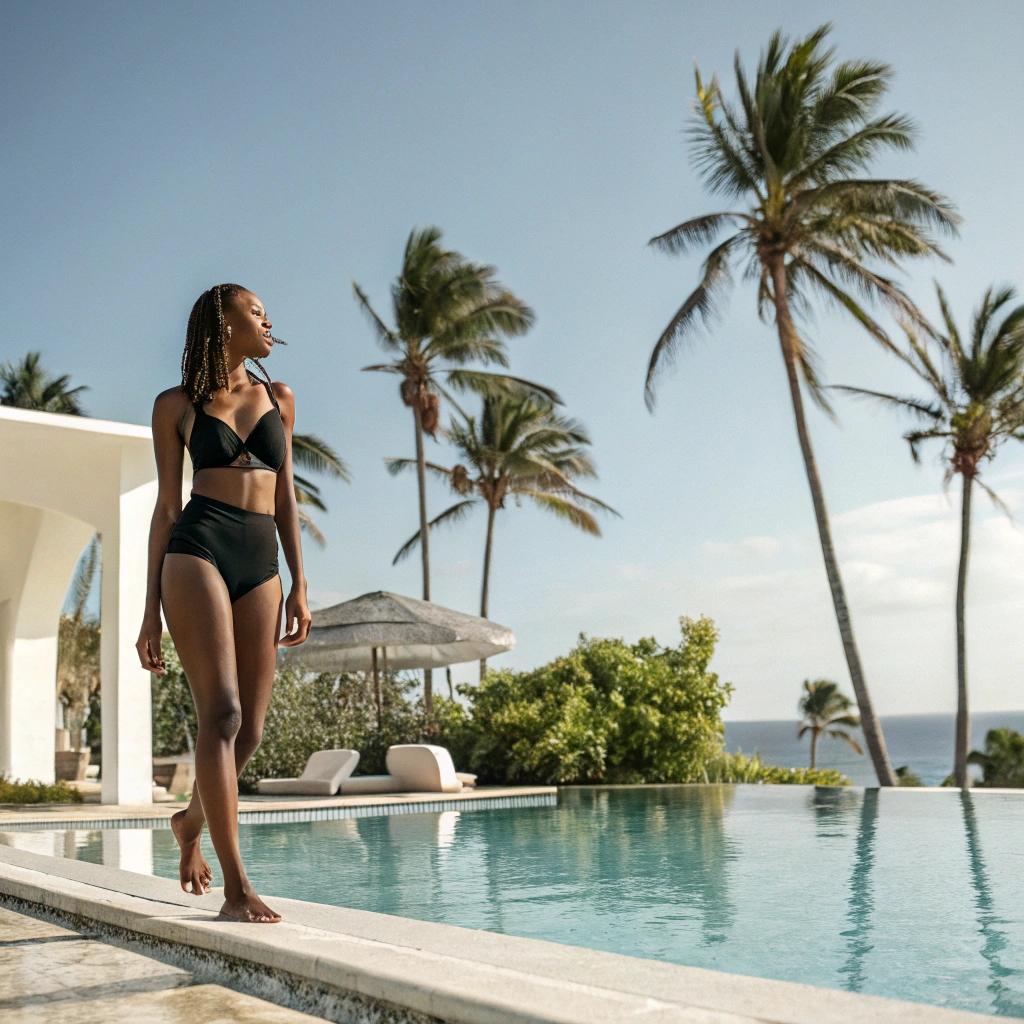

Most people think swimwear is just about looking good by the pool, but if you are a creator or digital nomad, it quickly becomes a tech problem too. You need pieces that fit different body types, photograph well across skin tones, survive constant travel, and play nicely with cameras, tripods, and social platforms. I learned the hard way that a bad bikini can ruin a whole content day faster than a slow Wi‑Fi connection. The short answer: choose high quality black owned swimwear with strong fabric, inclusive cuts, and bold colors that complement darker skin tones, then treat those suits like gear, not accessories.
Here is the TL;DR in a more technical way. For creators and digital nomads, swimwear has to solve four real problems: fit, color on camera, durability, and packability. Look for thicker fabrics like double lined nylon or polyester blends, UPF labels, clear size charts that include hip and torso measurements, and designs that mix solids with simple lines so your body, not the pattern, stays the focus on screen. Think of each piece as part of your personal brand and your production setup. You are not just buying a suit. You are building a repeatable, portable content system you can take from Bali to Barcelona without rethinking it every time.
Why swimwear choices matter more when you work online
If you only wear a swimsuit a few weekends a year, you can just grab whatever looks cute on a mannequin.
When you are a creator or digital nomad, that logic falls apart pretty fast.
You shoot content in harsh midday light, in tiny hotel rooms, on crowded beaches, in rooftop pools, and sometimes in places where you feel a bit out of place. You post those images on fast feeds where people swipe in seconds. You sit in front of a laptop later, trying to fix color in Lightroom and dealing with straps that dig into your shoulders because you wore that suit for 8 hours straight.
So swimwear becomes part of your tech stack. Not in a vague way. Very literal.
If you live on the internet, your clothes are part of your interface. Swimwear is one of the few things that has to work on your body, on camera, and inside a suitcase at the same time.
For Black creators, this adds extra layers:
– You want brands that actually think about darker skin in their color choices.
– You want designs that account for curves, butt, hips, thighs, and different bust sizes.
– You might want to support Black founders because part of your digital life is about where your money flows.
That is where black owned swimwear brands stand out for remote workers and creators. Not just as a social statement, but as a practical, almost technical choice.
Fit, data, and why size charts matter to nomads
Most remote workers underestimate how much time bad sizing wastes.
Think about this:
– You travel across borders.
– You do not have a stable mailing address.
– Returning a swimsuit that does not fit can mean customs forms, extra shipping, or just giving it away and losing that money.
So you need to get it right on the first order, or at least close.
Creators who treat their wardrobe like part of their workflow tend to look at fit the same way developers look at documentation. Clear, honest, and precise info saves you hours later.
When you shop from black owned brands that actually design with Black bodies in mind, the pattern grading often just works better. Hips are not an afterthought. Bust support is not a guess. And when you read real reviews from other Black travelers, the “true to size” comments suddenly have context that actually matches your frame.
Treat the size chart like an API spec. If a brand shows clear measurements, bust, waist, hip, torso length, and real fit notes, you can predict the result before you “deploy” money on it.
If a site does not offer:
– Measurements in inches or centimeters
– Photos on multiple body types
– Honest fit notes like “great for long torsos” or “better for small bust”
then you are basically testing in production with your own body.
Color, cameras, and how swimwear shows up on screen
This is where the overlap with tech gets very real. Cameras do not see color the way your eyes do. If you post on YouTube, TikTok, or Instagram, your swimwear is going through:
– Sensor interpretation
– Compression
– Screen differences across phones and laptops
If you have darker skin, some colors will either melt into your tone or blow out the highlights. I once wore a pale yellow bikini for a shoot and spent hours in editing trying to bring back contrast so my body did not look like a blur against the sand.
For creators, black owned swimwear has an edge because many designers test on a wide range of skin tones and under real sun, not only studio light.
Here are practical color tips that tie directly into your content:
- Bold jewel tones like emerald, cobalt, and deep purple pop on darker skin and still hold detail after compression.
- Rich earth tones like terracotta, rust, and deep olive look expensive on camera and match many travel locations.
- True white can look sharp but can also clip highlights, so check on your phone in direct sun before planning a big shoot.
- Pastels often need contrast accessories or backgrounds to avoid blending too much.
You do not need to become a color scientist. Just test your suits like you test a new mic. Put it on, go outside, record 10 seconds of video in harsh daylight and in shade, then look at it on your phone and laptop.
Ask yourself:
– Do I still see my shape clearly?
– Does my skin tone look rich or washed out?
– Do straps or seams create strange shadows?
If a brand is truly built for Black consumers, their product photos and social feeds usually tell you a lot. Look for content showing:
– Darker models in full sun, not only golden hour
– Shots in water, because reflections matter
– Short videos, not just still photos
That small research step makes your next pool shoot much easier.
How swimwear fits into your creator brand
If you share any kind of lifestyle content, your audience starts to connect your face and your fits with your content style.
Some creators almost unconsciously build a “uniform”: the kind of bikini or one piece you wear again and again. That uniform does not have to be boring. It just has to be predictable and easy to style.
Ask yourself:
– Do I want to look sporty, soft, bold, minimal, or something else?
– How much skin do I want to show on camera, not once, but regularly?
– What kind of sponsors do I want later, and will my swimwear style help or hurt that?
Your swimwear is part of your brand naming and theme the same way your domain and logo are. It sets expectations before you open your mouth on video.
If you care about supporting Black founders, that also becomes part of your narrative. “I travel full time, I work online, and I choose to wear Black owned pieces on my body” is a story by itself. Your audience notices patterns more than one off choices.
Travel proof features creators should look for
This is where we get practical. You need suits that hold up to airport security, hotel sinks, beach sand, and last minute content ideas.
Tech style checklist for nomad swimwear
- Fabric quality
Look for double lined fabric. Thicker material avoids transparency under water and gives you more support on camera. This also matters when you squat, sit, or move around in front of a tripod for 40 minutes. - Strap stability
Spaghetti straps can look nice but can dig into shoulders or slide while you are shooting. Wide, adjustable straps or cross back designs are safer if you film yourself swimming, climbing rocks, or carrying gear. - Secure bottoms
High cut and cheeky cuts are fine if you like them, but check how they move when you walk or sit. If you are constantly pulling them down or up between takes, that kills your flow. - Hardware and closures
Metal rings and hooks look pretty but can heat up under strong sun, which can be distracting. Also, they sometimes trigger airport scanners and feel annoying under backpack straps. - Dry time
If you shoot at 8 am and need to pack at 11 am, quick drying fabrics make a real difference. You do not want wet suits in packing cubes right before a flight.
Black owned brands that design with travel in mind often mention chlorine resistance or quick drying blends. Pay attention to that text, not just the lifestyle photos.
How many suits do you really need as a digital nomad?
Some creators carry 15 bikinis and then complain about heavy luggage.
Most remote workers who include water content in their brand can get away with a small but well planned set.
Here is a simple way to think about it:
| Type | Use case | How many |
|---|---|---|
| Classic solid bikini | Everyday beach, casual reels, stories | 1 to 2 |
| Statement piece | Campaigns, brand photos, travel thumbnails | 1 |
| Sporty / secure suit | Activities, water sports, vlogs | 1 |
| Versatile one piece | Pools, conservative settings, worn as bodysuit | 1 |
So, five solid suits can handle a whole year of travel content if you plan colors well and mix with different cover ups, hats, and jewelry.
The nice part about choosing black owned brands here is that many collections think about mix and match more carefully. You can buy one top and two different bottoms, for example, and instantly get more looks without more luggage weight.
How black owned swimwear fits into your wider creator stack
If your work revolves around web hosting, online communities, or tooling, swimwear might feel unrelated at first.
It is not.
Because once your income comes from online work, your life usually splits into two layers:
– The backend: your hosting, tools, automations, billing, newsletter platform
– The frontend: how you present yourself on camera, on calls, and in content
Many people obsess about the backend and then improvise the frontend every time. That backfires once you start doing more video or travel updates.
Here is where swimwear, oddly enough, enters the same conversation as your hosting provider.
Your “style system” vs your “tech stack”
Think of your style like you think of your tech setup.
- You want consistency, not chaos.
- You want pieces that talk to each other without conflict.
- You want less decision fatigue so you can focus on content itself.
If you choose 2 or 3 black owned swimwear brands that fit you well and photograph well, you can:
– Reorder similar cuts when needed without relearning new sizing.
– Mix old and new pieces without awkward gaps.
– Keep your visual identity stable across cities and seasons.
This feels small, but it reduces friction in a day where you might already be debugging a site, editing a video, and answering DMs.
Ethics, money flow, and your audience
Here is a harder question that many creators avoid.
If your income comes from community support, ad revenue, or sponsorships, where does your money flow when you spend it?
You do not need to turn every purchase into a statement, but Black creators in tech and media often talk about feeling invisible in both fields. Supporting black owned swimwear brands is one tiny counterweight.
Some readers will roll their eyes at this and think it is just shopping. I do not fully agree.
Every link you share and every tag in your caption passes traffic and trust to someone. Over time, that builds real economic patterns, not just likes.
When your audience sees you repeatedly tagging a small Black brand, they learn:
– This person thinks about who they support.
– This is part of their character, not a one off performance.
– Maybe I should notice the labels on my own clothes too.
Again, no one is saying a bikini will change the world. It just fits into larger decisions about what kind of digital citizen you want to be.
Content planning: turning swim days into asset days
If you run a blog, manage hosting, or code products, you are probably used to batch work. You know it is smarter to do related tasks together.
You can treat pool and beach days the same way. Instead of random selfies, plan them like mini content sprints.
Prep before you touch the water
A simple checklist:
- Charge your phone and camera, clear some storage.
- Pack a microfiber towel and something plain like a white or black shirt that can act as a neutral backdrop.
- Clean your lens. Salt and sunscreen ruin sharpness faster than you think.
- Know which suit works with which type of content: bright sets for fun reels, sleek one piece for serious YouTube thumbnails, etc.
If you are trying a new black owned brand, give yourself 10 to 15 extra minutes for testing before you swim:
– Shoot a 360 video of yourself walking and turning.
– Sit, squat, raise your arms, bend over.
– Check for see through areas, gaping, or weird wrinkles.
Fixing this early saves you from awkward surprises later on the editing timeline.
Reusing one suit across platforms
One well chosen suit can give you assets for weeks if you frame it correctly.
For example, one bright one piece from a Black designer can appear as:
– A full body shot on Instagram with a travel caption.
– A tight crop for a YouTube thumbnail.
– Background content in a TikTok where you talk about hosting costs or remote work, not fashion at all.
– A cover photo for a newsletter issue about time freedom or work life mix.
Many readers separate “tech” content from “lifestyle” content too much. Your body, your face, your clothes, including your swimwear, are just visual context while you talk about anything else you care about.
If part of your online identity is that you are a Black person working from global beaches, why hide it? Use the suit. Let the story show.
Caring for your suits when you live out of a backpack
Digital nomads talk a lot about cables and chargers, and very little about fabric care.
But if you spend money on high quality Black owned pieces, you probably want them to last more than one season.
Here is a simple care pattern that fits a travel schedule.
Fast wash flow for small bathrooms
- Rinse your suit in cold water as soon as you come back to your room. Do not wait overnight if you can help it.
- Use a drop of mild soap, swirl gently, then rinse again. Aggressive rubbing breaks fibers over time.
- Roll it gently in your towel to remove extra water instead of twisting.
- Hang it in the shower or near a window, but not in direct sun. Strong sunlight for hours can fade colors.
One more thing: avoid throwing your suits into hotel washing machines. Most of them are too rough, and you do not control the water temperature.
If you treat your pieces like camera gear, gently and with attention, they actually hold shape longer. That means your content looks consistent across months, which quietly improves your visual brand.
Privacy, safety, and comfort on camera
There is a part of this topic that no one who sells swimwear really talks about. Being in a swimsuit on camera can feel strange, even if you are confident.
And if you are a Black woman or femme creator, posting swim content can draw strange comments you did not ask for. That combination of race, gender, and body can make even a normal beach selfie feel loaded.
So picking the right suit is also about emotional safety.
Setting your own rules before you hit record
Before you build a content plan around swimwear, ask yourself:
– What parts of my body do I feel comfortable showing repeatedly?
– Do I want family members, clients, or potential employers to see this?
– If one of these photos went viral on a random website, would I be ok with it?
If you feel more grounded in a one piece or in higher waist bottoms, that is not “less bold.” It is simply your boundary.
Black owned designers often come from the same cultural context you do. They understand aunties, church members, or community expectations. That does not mean every piece is modest, just that the range of cuts often feels more nuanced.
You can also use cover ups strategically:
– Sheer pants or skirts for walking to and from the beach
– Oversized shirts for cafe or coworking space
– Lightweight kimonos for quick photos when you want more movement without more exposure
That way, you still get your beach content without feeling overexposed every time.
Where tech meets fabric: planning for future sponsorships
If you are serious about your online work, you probably think about future sponsors. Maybe you already have some.
Many creator contracts include:
– Brand safety expectations
– Tone and visual style guidelines
– Restrictions against working with competitors
So even if you are not a “swimwear influencer,” your current choices in what you wear can shape who reaches out later.
Why consistent use of black owned swimwear brands can be strategic
If your feed already shows:
– Clear, well lit swim photos
– Repeated tags of one or two small Black designers
– Thoughtful captions about travel and work
then you quietly send this signal: “I know how to present a product and I keep my visuals consistent.”
Later, those brands or similar ones can approach you with:
– Affiliate programs
– Sponsored posts
– Collabs like limited color runs or capsule drops
Think of this as pre work. You are not just buying a suit. You are building a visible portfolio of how you handle visual storytelling, location scouting, and styling.
At the same time, keep your integrity. If a large brand that ignores Black consumers suddenly wants to use your audience while paying less or expecting you to soften your message, you have to decide where your line is.
Sometimes the smaller, Black owned label that has been liking your posts for months is a better long term partner than a giant company that views you as a checklist item.
Common mistakes creators make with swimwear
Not every error is dramatic. Many are small, boring, and avoidable.
Three frequent problems and how to fix them
- Problem 1: Overcomplicated designs
Multi strap, cut out suits look nice in product shots but can be a nightmare to put on, keep in place, or pack. When you are changing in a small bathroom or the back of a car before a shoot, you will wish for simpler shapes. Use complex designs for one off campaigns, not daily nomad life. - Problem 2: Ignoring local context
Some beaches and pools are very relaxed about skin. Others, especially in more conservative countries, are not. Check local norms before you arrive. A solid one piece from a Black designer can shield you from awkward stares more than a tiny thong bikini that might feel normal at home. - Problem 3: Forgetting about movement
You will rarely just lie flat for photos. You will run, walk, laugh, maybe record yourself working by the pool. If your suit only looks good in one angle, it is not practical. When you try a new piece, move around in front of a mirror or camera for a good five minutes and see what shifts.
These are not only style issues. They affect your workload. Every adjustment between shots is time you are not recording or editing.
Questions creators often ask about black owned swimwear
Is black owned swimwear more expensive than other brands?
Sometimes it is, sometimes it is not. Price often tracks fabric quality, small batch production, and fair wages. Many Black designers run lean operations, which can keep prices reasonable. Others position their brands in the premium space. The better question is whether the cost per wear makes sense for your travel life. If one well made suit replaces three cheap ones that sag after two trips, it may actually save you money.
How can I tell if a brand really designs for Black bodies or just markets to us?
Look at the details:
– Size range that goes beyond S to L
– Fit notes that mention bust support and hip coverage
– Real customer photos across different body shapes
– Models with different shades of dark skin, not just one token face
Also read the “about” page or social captions. You can often tell if someone is speaking from lived experience or just using trendy language.
What if my content is more “tech” and less “lifestyle”? Do I still need to care about swimsuits?
If you never show your body, probably not. But many tech or hosting creators still share travel shots, conference trips with hotel pools, or casual stories on weekends. In those moments, your swimwear still shapes how professional, grounded, or aligned you look with your stated values.
Even if your core audience is there for WordPress tutorials or server advice, they are still paying attention to the human behind the setup. Clothes send signals, whether you want them to or not.
Can I mix high end and budget pieces in my wardrobe?
Yes. You might have one or two premium black owned suits that you treat as your main “on camera” pieces, and a few cheaper ones for crowded hostel pools or rough activities. That balance is normal. Just be honest with yourself about which suits you reach for when it matters most. Those are the ones worth investing in.
How do I talk about supporting Black brands without sounding performative?
You do not need grand statements. Simple is better:
– Tag the brand.
– Mention why you like the fit or the fabric.
– If it matters to you, add one line about supporting Black founders.
Over time, your audience will see the pattern. Consistency says more than any single caption.
What should I do next if I want my swimwear choices to support my creator life better?
You can sit down for 20 minutes and audit your current setup:
– Which suits do you actually wear on camera?
– Which ones travel well and dry fast?
– Which brands feel aligned with your values and body?
From there, maybe you keep two, donate three, and plan to add one or two strong, travel smart pieces from Black designers that understand both your skin and your screen. That small shift can give you more confidence, smoother content days, and a clearer visual story, all without changing your hosting plan or your upload schedule.