
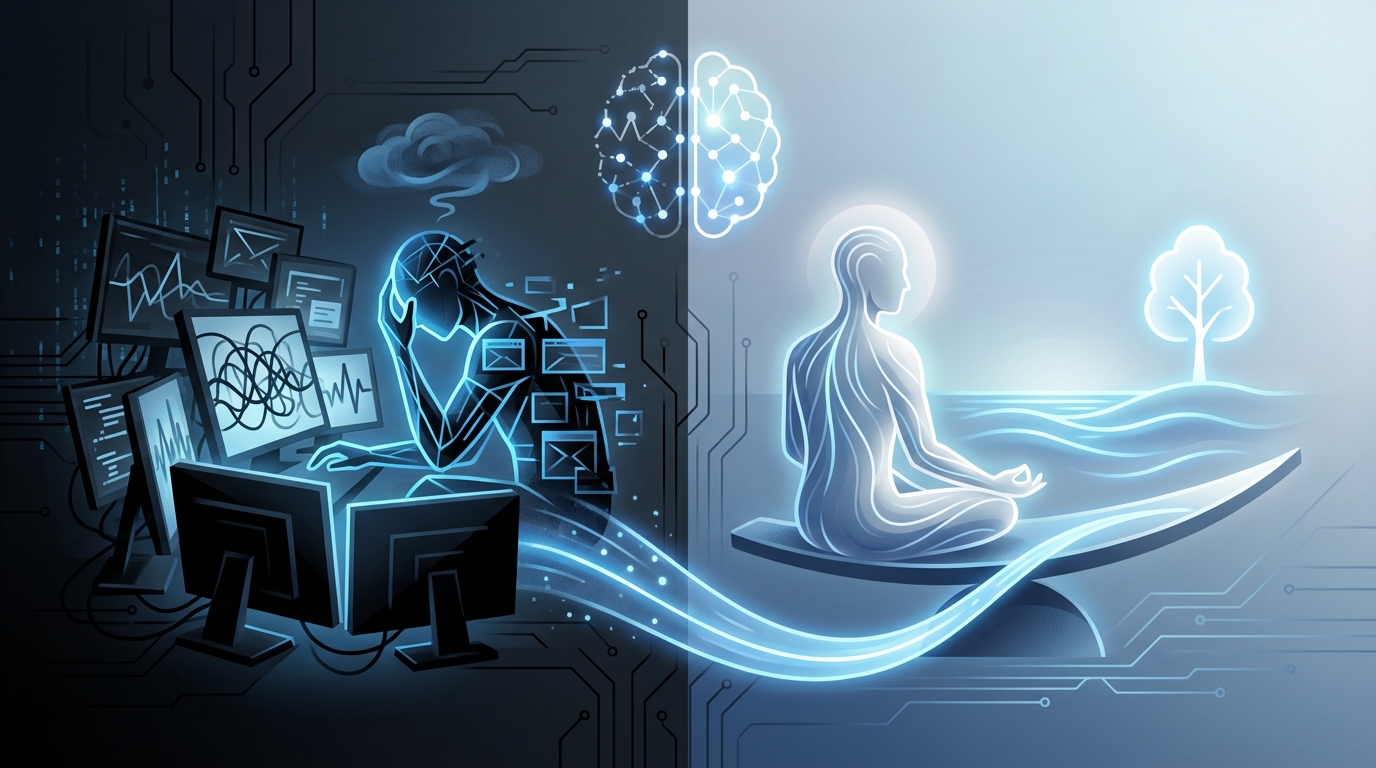

Most people think moderator burnout is just “too many trolls and not enough sleep.” I learned the hard way that it is usually death by a thousand cuts: emotional load, bad tooling, vague rules, power politics, and the feeling that you are the only adult in the room.
The short version: moderator mental health hinges on three things. Clear boundaries (time, scope, authority), sane tools and workflows (queues, filters, automation), and a culture that treats moderators as humans, not shields. If you combine time-boxed shifts, rotation, strict “off hours,” written policies, regular debriefs, and a bias toward automation over heroics, you cut burnout risk drastically. Ignore those, and no amount of “self-care” talk will fix the problem.
What Actually Burns Moderators Out
Before talking about fixes, you need a realistic model of the problem. Telling a moderator to “take more breaks” without changing the system is like telling a sysadmin to meditate while the data center is on fire.
- Emotional load and exposure to abusive content
- Constant low-level vigilance and interruption
- Ambiguous rules and inconsistent enforcement
- Lack of authority matched to responsibility
- Bad tooling that wastes cognitive energy
- Community politics and social pressure
- Isolation and lack of support from peers or admins
Mental health for moderators is not about more willpower. It is about reducing unnecessary load and giving them real control over their work and time.
Moderation is a mix of triage nurse, janitor, and judge. That role pulls you in several directions at once: you are supposed to be empathetic, fast, consistent, diplomatic, and available. If the system around you is sloppy, those expectations grind you down.
Emotional Load: Abuse, Self-Harm, and Constant Conflict
Any community at scale has a share of harassment, hate speech, graphic content, and self-harm disclosures. Over time, exposure to that content changes how moderators feel about the community, and sometimes people in general.
Patterns that increase emotional strain:
- Repeated exposure to graphic or traumatic posts without rotation
- Users weaponizing reports to harass other users or mods
- Being the “complaint desk” for every minor grievance
- Handling self-harm threats with no training or escalation path
Moderators rarely get formal training in trauma handling or de-escalation. Many are volunteers. Yet they are dealing with content that actual clinicians and support workers manage with supervision and protocols.
Constant Vigilance and the “Always On” Trap
Communities do not sleep, but humans do. At least, they should.
Common moderator behavior patterns:
- Checking mod tools last thing at night and first thing in the morning
- “Quickly” dipping into the queue on days off
- Keeping notifications on 24/7
- Feeling guilty if they do not respond immediately
Notifications and dashboards are designed to keep attention. Combined with a personality that cares about order and fairness, moderators slide into permanent low-level standby mode. That kind of background vigilance is a classic setup for burnout.
Vague Rules, Community Drama, and No Win Situations
If your community guidelines can be read five different ways, your moderators are doing unpaid legal interpretation every day.
Stress multipliers:
- Guidelines that are more “vibe” than rule
- Owners who override mod decisions based on popularity
- Users who screenshot everything and frame it as “evidence” of bias
- Factions inside the community that treat moderation as a political weapon
Nothing drains a moderator faster than being held responsible for rules that leadership will not stand behind in public.
If moderators see their decisions undermined, or rules changed silently in the background, trust erodes. They start second-guessing every call.
Bad Tools and Cognitive Load
Moderation tools are often bolted on as an afterthought. That mistake pushes extra cognitive work onto moderators.
Warning signs in your stack:
- No bulk actions; everything is one ticket at a time
- Limited or no filters; important reports buried under noise
- No proper audit log or history view for users or threads
- Inconsistent UI between web and mobile
- No ability to tag or categorize edge-case decisions for future reference
The result is attention fragmentation. Instead of spending mental energy on judgment and empathy, moderators burn it on navigation and re-discovery.
Isolation and Lack of Support
Many moderators operate alone, trade late night messages with one other mod, or have a small team that never talks except inside comment threads. That isolation keeps stress bottled up.
Common patterns:
- No regular mod meetings or debriefs
- No clear path to escalate difficult cases
- No private channel for venting or emotional support
- Admins who “check in” only when something goes wrong
If moderators feel that no one has their back, every decision becomes heavier.
Designing Moderation Work To Protect Mental Health
You cannot yoga your way out of a structurally unhealthy moderation setup. The design of the role and the tools must carry part of the load.
Set Hard Time Boundaries and Shifts
The first guardrail against burnout is time based, not emotional. Treat moderator time like on-call time for operations engineers.
Key practices:
- Define explicit shifts, even for volunteers.
- Set “no moderation” hours for each person and defend them.
- Rotate coverage so no one is stuck on high-traffic windows permanently.
- Disable push notifications outside assigned hours.
A simple approach:
| Role | Coverage Window | Restrictions |
|---|---|---|
| Primary mod | 18:00 – 22:00 weekdays | No mod work before 18:00 or after 22:00 |
| Secondary mod | 22:00 – 02:00 weekdays | Only severe flags; no routine queue clearing |
| Weekend rotation | 4-hour blocks | Protected weekends off on rotation |
If your community “cannot function” unless the same moderator checks everything at all hours, you do not have a dedication problem. You have a staffing and design problem.
Define Scope: What Moderators Are Not Responsible For
Most communities define what moderators can do, but not what they should refuse.
Create an explicit “not our job” list:
- Private disputes that do not violate any rule
- Support for third-party products or platforms
- Life-and-death mental health or self-harm counselling
- Personal guarantees about user safety outside the platform
- PR damage control for leadership errors
This is not cold. It is realistic. Moderators are not therapists, lawyers, or security staff. They can signpost resources and follow emergency protocol, but you protect their mental health by limiting the weight put on their shoulders.
Match Authority To Responsibility
If moderators feel responsible for outcomes but have no say in rules or tools, frustration builds quickly.
Concrete steps:
- Give moderators input on guideline changes before release.
- Let moderators propose tooling changes based on real queue pain.
- Publish a policy: admins will not quietly reverse mod actions unless they clearly violate written rules.
- Document an appeal process so moderators do not become the “supreme court” for every complaint.
This also includes saying no to users. Moderators need explicit backing that they can refuse certain demands without fear of retaliation from leadership.
Invest in Tooling That Reduces Cognitive Load
Tooling will not solve harassment, but it can cut the friction that wears people down.
Core capabilities that protect mental energy:
- Filterable queues by severity, age, and type.
- Reasonable defaults: high-severity flags float to the top.
- Bulk actions for obvious spam or bot waves.
- Quick views into user history and prior mod actions.
- Standardized response templates for common issues.
- Tags or labels to mark edge cases for team review.
Consider a simple severity model in your mod UI:
| Severity | Examples | Target Response | Who Handles |
|---|---|---|---|
| Critical | Self-harm threats, doxxing, credible violence | Immediately | Senior mod / admin |
| High | Hate speech, severe harassment | Within 30-60 minutes (in shift) | Any mod |
| Medium | Rule-breaking content without active danger | Same shift | Any mod |
| Low | Minor off-topic, user disputes, unclear cases | When available | Any mod, or meeting review |
This type of structure helps moderators stop treating every notification as a fire.
Use Automation To Protect Humans, Not Replace Them
Smart automation shields moderators from the worst patterns and tedium.
Practical examples:
- Auto-queue content with certain keywords for review without showing the full graphic text in preview.
- Basic rate limits and posting limits for new accounts to reduce spam floods.
- First-pass machine filters for obvious spam or known scam templates, subject to periodic review.
- Auto-replies with clear instructions for common support issues that are not moderation problems.
Automation should remove repetition and the most toxic edge of the queue, not hand full control to an opaque model.
The key is giving moderators override power and visibility into automated decisions, and keeping an audit trail.
Handling High-Risk Content Without Breaking People
Some categories of content are corrosive if a small group of moderators handles all of it long term.
Self-Harm, Suicide, and Severe Distress
If your platform or community allows or cannot avoid self-harm disclosures, you owe moderators a clear process.
Elements of a sane protocol:
- Short, clear internal guide with phrases to use and avoid.
- A standard response template that points to real crisis resources by region.
- A rule that severe cases are escalated to a smaller, trained group, not handled by every mod by default.
- Reflective logging: after a self-harm case, mods document actions and feelings for debrief.
Do not turn moderators into therapists. The goal is to respond humanely, avoid making things worse, and move quickly to professional support links where appropriate.
Hate Speech and Harassment
Exposure to constant abuse changes how moderators feel about the community and specific groups, especially if moderators belong to targeted groups.
Protective steps:
- Rotation: do not assign the same person to review harassment reports all the time.
- Masking: show condensed versions in the queue, with full content view only if needed.
- Zero ambiguity: very clear written lines on slurs and threats, so mods do less interpretive work.
- Debrief: regular time to talk about trends and impact, not just individual tickets.
If your community frequently targets your own moderators, you need higher-level policy and enforcement, not thicker skins.
Graphic or NSFW Material
Graphic content has cumulative effects. For staff teams that must handle it (for example, trust and safety on a platform with user uploads), you need real hygiene.
Operational practices:
- Hard daily limits on exposure time per person.
- Mandatory visual breaks and rotation to other tasks.
- Option for moderators to recuse from certain categories for personal reasons.
- Access to professional mental health support, not just “talk to your manager.”
Volunteer communities that allow NSFW content should think honestly about whether the benefit justifies the moderator cost.
Team Culture: Support, Debrief, and Real Talk
Tools and schedules matter, but culture decides whether moderators feel alone or part of a group that has their back.
Regular Mod Meetings That Are Not Just Fire Drills
Most mod meetings are called because something blew up. That trains everyone to associate gathering with crisis.
Instead, schedule:
- A fixed monthly or biweekly mod meeting.
- A brief agenda: trends in reports, edge cases, upcoming changes.
- Time at the end for “what is wearing you down right now.”
- Action items that are actually tracked and revisited.
If moderators raise the same stressor three meetings in a row and nothing changes, you have a leadership problem, not a resilience problem.
Clear Internal Communication Channels
Use structured communication instead of fragmented back-channel whispers.
Useful channels:
- Private mod chat for quick coordination.
- Separate “vent” thread or channel with simple norms: no sharing outside, no judgment.
- Documentation space (wiki, shared docs) for rules, precedents, and FAQs.
- Escalation path: how to reach admins or safety staff in real time for critical events.
This separation reduces noise in main channels and gives moderators safe places to process.
Normalize Saying “I Need a Break”
Moderators often treat stepping back as failure. That is how you end up with sudden disappearances or angry resignations.
Set expectations:
- Encourage mods to pre-plan off periods: vacations, exam seasons, known stressful work periods.
- Track active vs inactive status so load is distributed.
- Explicit rule: no negative judgment for stepping back, only for disappearing without any notice at all.
Leads should model this. If the head moderator never takes a visible break, others will copy that pattern.
Train Moderators Like You Actually Value Their Time
Too many teams throw new moderators into the queue with a few links and “ask if you have questions.” That is not training.
A sane training pipeline includes:
- Basic orientation on tools and rules.
- Shadowing: new mod watches experienced mod handle cases in real time.
- Guided practice: new mod proposes actions; senior mod reviews and explains decisions.
- Checkpoint: explicit “you are ready” conversation.
This cuts anxiety and reduces the constant “am I doing this right” mental loop that increases stress.
Personal Practices That Actually Help Moderators Cope
System changes come first. Still, individuals need habits that stop the job from swallowing their entire identity.
Separate Mod Identity From Personal Identity
Moderators often move from “I enforce the rules here” to “I am the rules here.” That is dangerous for their mental state.
Countermeasures:
- Use a distinct account for moderation work, separate from your personal user identity if possible.
- Do not tie your self-worth to community metrics (member count, daily activity).
- Keep at least one hobby or online space where you are not a moderator.
If you cannot remember the last time you used the internet without being “on duty,” your risk of burnout is high.
Control Your Inputs: What You See and When You See It
The sequence in which you see things matters.
Concrete steps:
- Start mod sessions with routine or low-severity tasks, not the worst queue items.
- Batch queue time: for example, two 30-minute windows per shift instead of constant checking.
- Turn off alerts that pop up on lock screen or watch; pull information, do not let it push constantly.
Humans are not good at switching rapidly between heavy emotional content and normal life. Plan transitions.
Recognize Early Signs of Burnout
You do not go from fine to wrecked in one day. The pattern is gradual.
Warning signs:
- Cynicism toward all users, treating everyone as a potential problem.
- Emotional numbness during serious incidents.
- Increased irritability toward teammates or friends.
- Physical symptoms: headaches, poor sleep, stomach issues tied to mod work.
- Compulsive checking of tools even late at night or at social events.
If you see several of these for more than a few weeks, it is time to reduce load or take a structured break.
Have a Personal Exit Plan
Moderation roles are not lifetime appointments. Pretending they are can trap people.
Write down:
- Conditions under which you will step back from active duty.
- Things that must change for you to remain in the role.
- How much time per week you are willing to give, and a hard cap.
This lets you make decisions earlier, not after you have already checked out emotionally.
For Community Owners: Structural Commitments To Moderator Mental Health
If you run the platform or community, your choices control most of the load on moderators. Mod mental health is not a side issue; it directly affects retention, conflict rates, and even legal risk.
Staffing Moderation According To Reality, Not Hope
Communities often grow faster than moderation capacity.
Basic rule of thumb:
| Community Size / Activity | Minimum Mod Team | Notes |
|---|---|---|
| < 1,000 active users | 1-2 moderators | Light queue, mostly reactive |
| 1,000 – 10,000 active users | 3-6 moderators | Need clear shifts and rotation |
| 10,000 – 100,000 active users | 6-15 moderators | Requires specialization and tooling |
| > 100,000 active users | 15+ moderators | Dedicated trust & safety design needed |
These numbers are rough; content type and culture matter. But if you are at 50,000 active users with two exhausted mods, you do not need a wellness workshop. You need more moderators and some engineering.
Paying Moderators or Compensating Them Fairly
Not every project has budget to pay moderators, but pretending moderation is cost-free is dishonest.
Forms of compensation:
- Direct pay for hours worked for commercial communities.
- Stipends, gift cards, or revenue share for volunteers.
- Tooling budgets and hardware where needed for staff handling heavy queues.
- Training access: courses on conflict resolution, mental health first aid, etc.
If a community generates revenue, paying moderators should be considered infrastructure cost, not charity.
Protecting Moderators From Community Retaliation
Moderators are targets when controversial calls happen. If you do not protect them, they will leave.
Protective measures:
- Clear rule against doxxing or harassment of moderators, with strict penalties.
- Option for pseudonymous mod accounts, shielding real names and personal profiles.
- Official announcements that controversial rule changes are leadership decisions, not individual mod whims.
- Back-channel support if a moderator is targeted, including temporary reassignment or time off.
This signals that leadership values the humans behind the mod actions.
Transparency About Limits and Capabilities
Users often assume moderators can do everything: read every message, predict every bad actor, guarantee safety.
To manage expectations:
- Publish a clear “what moderation can and cannot do” page.
- Explain that moderation is partly reactive and cannot pre-screen every interaction.
- Share high-level stats: number of reports, average response times, not in a self-congratulatory way but to explain constraints.
That reduces unrealistic demands and reduces guilt in moderators who feel they are “failing” to stop every incident.
When To Bring In Professional Support
There is a line where homegrown support is not enough.
Indicators You Need Professional Help for the Team
Signs at the system level:
- Several moderators reporting nightmares, intrusive thoughts, or panic attacks tied to content.
- High churn: many mods leaving within months, citing stress or mental health.
- Content categories that would be clinical work in any other context (frequent self-harm, severe abuse stories).
At that point, leadership should look at:
- Providing access to counseling services or EAP-like programs for staff moderators.
- Consulting with mental health professionals on content policies and moderator protocols.
- Reducing or blocking categories of content that are producing high harm for limited community value.
If your moderators are breaking down, the problem is not individual resilience. It is a structural design error in how content and safety are handled.
Legal and Ethical Dimensions
Moderators sometimes encounter content that borders on legal obligations: threats, child exploitation, serious violence.
Ethical protection includes:
- Clear, legally informed escalation paths for such content.
- Training on what not to store, forward, or download locally.
- Immediate removal from exposure and support for any moderator who has to handle severe illegal content.
This also protects the organization, but here the ethical duty to humans should be the priority.
Building Communities That Do Not Eat Their Moderators Alive
Mental health for moderators is not one program or checklist. It is the outcome of many small choices:
- Hard limits on time and scope.
- Enough people on the team and enough automation in the stack.
- Clear rules that leadership will stand behind publicly.
- Real support: meetings, debriefs, training, and when needed, professional help.
- Honesty about the limits of what moderators can carry for a community.
The internet is not getting calmer. If you want your community to endure, treat moderator mental health as infrastructure, not aftercare.