
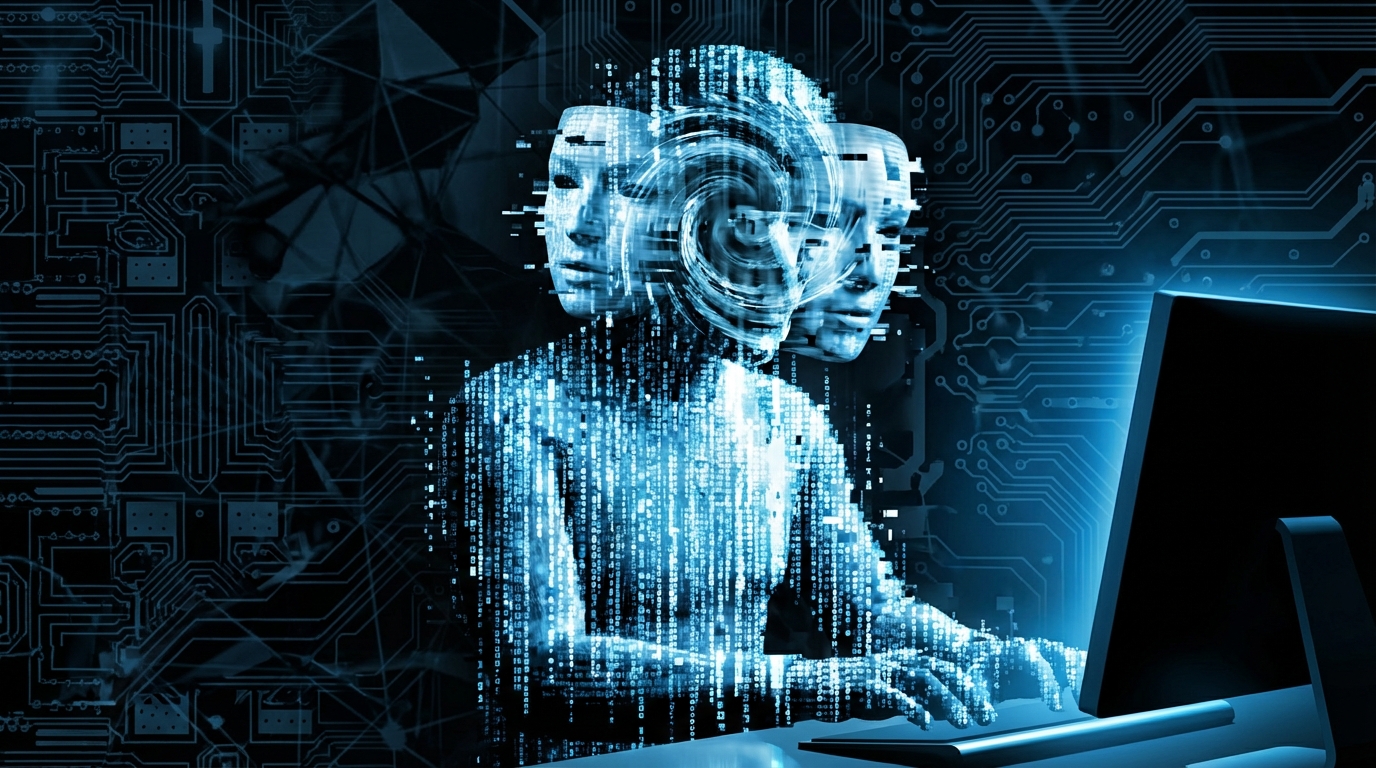

Most people still think deepfakes are a weird internet party trick. Swap a face in a movie clip, fake a meme, move on. I learned the hard way that they are now closer to a security threat than a meme. Once you see a convincing synthetic voice authorize a wire transfer, you stop laughing.
The short version: deepfakes are AI-generated media that can fake faces, voices, and entire personas with a level of realism that now threatens identity verification, reputations, and trust in any online interaction. The tech is way ahead of most defenses. If your online identity relies on voice calls, video calls, profile pictures, or “send a selfie with your ID,” you are exposed. The only real counter is layered verification: cryptographic proofs, strong device and account security, behavioral checks, and a default stance of skepticism toward any media that can be captured with a camera or microphone.
If a stranger can see and hear you online, there is enough data for someone to train a model that looks and sounds like you.
What deepfakes actually are (beyond the headlines)
Deepfakes are synthetic media generated by machine learning models that mimic real people. This covers:
- Face swaps in videos
- AI-cloned voices from short audio samples
- Whole-body animation driven by motion capture or even a single photo
- Text-to-video that can be guided to resemble a specific person
The “deep” in deepfake comes from deep learning models, not from any kind of secret hacker magic. The same GPUs that run Stable Diffusion or LLMs can run these models.
Under the hood, most deepfakes rely on one or more of these components:
| Method | What it does | Identity risk |
|---|---|---|
| Autoencoders / face-swapping models | Learn to map your face onto another person’s head and preserve expressions | Highly realistic video calls, fake “evidence” clips |
| GANs (Generative Adversarial Networks) | Generate photorealistic images and faces that never existed | Fake profiles, synthetic “witnesses”, bogus KYC documents |
| Diffusion models | Generate or edit images and video, frame by frame | Deep edits of real footage, hard to detect by eye |
| Neural voice cloning / TTS | Copy a voice from a few seconds of audio and make it say anything | Fake calls to banks, coworkers, family, “CEO fraud” |
| Motion transfer / pose transfer | Make a person in a source image perform actions based on another video | “Proof” videos of someone doing or saying something they never did |
Anyone with a mid-range GPU and a weekend can train a passable face swap. The bar is no longer state-level attackers. It is bored enthusiasts and low-skill scammers.
Why deepfakes matter for online identity, not just for memes
Online identity used to rest on a weak but familiar stack:
- Password + email
- Maybe SMS OTP
- Profile pictures and social graph
- Occasional video or voice verification
Deepfakes attack that entire stack from multiple sides.
1. Video identity checks are no longer reliable on their own
Plenty of services still use “record a selfie” as a security gate. Banks, exchanges, KYC providers, even some hosting and domain providers for high-risk accounts.
A common flow:
- User holds up government ID
- User turns head left and right
- User reads a phrase out loud
Once you accept that:
- A static selfie can be animated with head turns
- Voice can be cloned from short clips
- ID cards can be generated or altered with AI
You end up with a process that signals “security theater” more than actual identity assurance.
If your KYC vendor relies on “move your head” and “say this line” as a primary defense, you should assume that a reasonably skilled attacker can bypass it.
2. Voice is now a weak factor by default
Call center agents are still trained to “recognize” a returning caller by voice and basic biography questions.
Deepfake voice models break that assumption:
- Voice cloning from 30 to 90 seconds of audio is common
- Public content (podcasts, YouTube, conference talks) is ample training data
- Real-time voice conversion lets attackers speak and have it mapped into a target voice
For Web hosting, DevOps, or SaaS operations, think of:
- “Hi, this is your CTO, I need you to reset MFA on my account right now.”
- “This is the customer. They are on the road and do not have access to their email. Please change the domain registrant email.”
If your support workflows are structured around “sounds like the same person” plus some trivia, you have a soft underbelly.
3. Social engineering gets a realism boost
Deepfakes plug directly into phishing and social engineering:
- Fake video calls from “team leads” asking for access or payments
- Fake customer video that pressures a junior support agent
- Fake social profiles with AI-generated photos that look better than real ones
The pattern is simple: people trust sight and sound more than text. Attackers know this and add synthetic media to old scams.
4. Reputational damage is now cheaper and faster
You no longer need a newsroom or visual effects studio to fake a scandal clip. A motivated attacker can:
- Draft a script
- Clone a voice from existing public audio
- Use a face model to sync lips and expressions
- Post a short video to social channels
For someone who runs communities, open source projects, or a hosting brand, a fake video of “you” saying racist or illegal things is enough to trigger real fallout before any forensic work begins.
Deepfakes do not need to be perfect. They only need to be plausible enough to cause doubt, outrage, or hesitation for a few news cycles.
How deepfakes are made: the short technical tour
This part is not academic. Understanding how they work exposes where they can and cannot be trusted.
Data collection: your public life as training material
Attackers need data:
- Images: profile pics, selfies, tagged photos, thumbnails
- Videos: talks, streams, vlogs, interviews
- Audio: podcasts, meetings, Discord chats, Twitter Spaces
Unstructured media is enough. Quality matters, but volume matters more for many models.
Model training: fitting your face and voice
Typical steps:
- Face extraction: crop and align face frames from the source material.
- Feature learning: train an autoencoder or related model to encode and decode faces.
- Swap: encode both source and target, then decode with target identity while preserving poses and expressions.
- Post-processing: color matching, smoothing, artifact removal.
Voice cloning follows a similar idea:
- Speaker embedding: learn a compact vector that represents your voice.
- TTS engine: feed text plus your embedding into a synthesizer.
- Vocoder: turn spectrograms into waveforms.
Newer systems can do real-time conversion, where an attacker talks and the model outputs your voice.
Deployment: real-time versus pre-rendered
| Type | Usage | Limitations |
|---|---|---|
| Pre-rendered video/audio | Blackmail, fake “proof”, asynchronous scams | Harder to handle interactive conversations |
| Real-time video avatars | Live calls, Zoom/Meet/Teams imposters | Artifacts under network lag or fast movements |
| Real-time voice conversion | Phone calls, VoIP, in-line audio scams | Subtle glitches, accent mismatch, background noise issues |
The line between these is soft, and hardware keeps improving.
Where deepfakes intersect with web hosting and online communities
This is not theoretical if you run:
- Web hosting for businesses or creators
- Online communities with high-value identities
- Developer platforms with privileged access (APIs, SSH, CI/CD)
The same infrastructure that keeps your servers online has to keep your team and users from being tricked.
Account recovery and support are now prime targets
Every serious platform has an “account recovery” path. Attackers love those, because users are at their weakest when locked out.
Risk areas:
- Support agents accepting video/voice as extra proof.
- “Emergency bypass” flows that remove MFA based on calls from a “known contact”.
- Smaller hosting companies that rely on manual checks from a small support team.
If your process is:
“User emails from a new address, claims their old one is locked, provides some personal details, and offers to jump on a video call to prove identity.”
Then deepfakes turn that into a predictable attack pattern.
Community moderation under deepfake pressure
Community managers, Discord mods, and forum admins already deal with sock puppets and ban evasion. Deepfakes turn the dial up:
- Fake “confession” videos of prominent members to stir drama.
- AI-generated harassment content using a victim’s face.
- False accusations where the accuser presents a synthetic video.
Mods are not digital forensics experts. They have limited time and tools. That creates space for targeted harassment campaigns that weaponize synthetic media.
Abuse of user-generated content platforms
If your platform allows uploads, streaming, or profile videos, you inherit deepfake problems:
- Non-consensual deepfake adult content
- Political impersonations cloaked as satire
- Phishing videos targeting your own users, hosted on your infra
Legal and policy challenges arrive quickly: DMCA, privacy laws, and local regulations do not care that you are “just a host.” You will get complaints and takedown demands.
How to defend identity in a deepfake world
Perfect defense is not realistic. Instead, you build layers so that deepfakes are just one factor, not the deciding factor.
1. Treat media as evidence, not as proof
Shift your mental model:
If it can be recorded on a phone, assume it can be faked.
For identity:
- Do not treat video calls as a strong factor by themselves.
- Do not treat voice calls as verification without other data.
- Do not accept “here is a clip of me proving it is me” as sole recovery evidence.
You are not required to believe eyes and ears over more stable signals like cryptographic keys and long-running account behaviors.
2. Strengthen technical identity: keys, not faces
If your online identity matters, rely more on what you possess and control, not what you look or sound like.
For individuals:
- Hardware security keys (FIDO2 / WebAuthn) for critical accounts.
- Strong unique passwords stored in a reputable password manager.
- Time-based OTP apps or hardware tokens instead of SMS.
For operators and platform owners:
- Require WebAuthn for staff accounts with admin or support access.
- Offer WebAuthn and passkeys to users, and encourage them for high-value accounts.
- Use SSH keys and signed commits for infrastructure and code operations.
This does not remove the risk of social engineering, but it forces attackers to go after devices and keys rather than just scraping video.
3. Harden account recovery and support workflows
This is where many teams are taking a bad approach: they add “jump on a call” as extra security, then feel safer. For deepfakes, that is backwards.
Better patterns:
- Bind accounts to long-lived, verifiable contact channels like email and TOTP keys.
- When changing sensitive details (email, MFA devices), require confirmation through the existing channel, not just the new one.
- Use cool-down periods for high-risk actions, with alerts to prior contact channels.
- Script support agents to treat “urgent video call” requests as higher risk, not lower.
If you run a small hosting shop or community site, this feels heavy. The alternative is a support agent “convinced” by a synthetic face and voice on a busy day.
4. Improve training: teach deepfake awareness with concrete examples
Most training talks about phishing emails. Deepfake defense needs a similar level of mainstream understanding.
Train your team to:
- Expect attackers to impersonate staff on calls and video.
- Pause and verify through a second channel before executing unusual requests.
- Recognize red flags like sudden urgency, secrecy, and “just this once” exceptions.
Use internal drills:
- Simulated “CEO” calls to accounting asking for urgent transfers.
- Fake “user” video calling support to push account changes without normal checks.
You do not need Hollywood-grade deepfakes to train the muscle of verification beyond sight and sound.
5. Use technical detection, but do not trust it blindly
There is a growing market of “deepfake detection” tools. Some are useful, but none are magic. They tend to look for:
- Inconsistent lighting, shadows, or reflections.
- Weird eye movement patterns or blink rates.
- Compression artifacts that differ across the frame.
- Signature traces of known generative models.
You can integrate these tools as:
- Screening for uploaded videos or streams.
- Assistance for moderation teams.
- Internal checks for suspicious content in support requests.
Detection tools should raise questions, not provide comfort. Negative results are not proof of authenticity.
6. Support cryptographic content authenticity where possible
The Content Authenticity Initiative, C2PA specs, and similar projects aim to embed cryptographic provenance data into media files.
When mature, this could mean:
- Cameras signing images at capture time.
- Editing tools preserving a traceable history of modifications.
- Viewers showing you where and how media was edited.
Right now, this is patchy and early. But if you run hosting or content platforms, watch where the standards are going:
- Be prepared to preserve or validate authenticity metadata instead of stripping it.
- Offer APIs or tools for users to check provenance on their own uploads.
This does not fix legacy content, but it can raise the floor for future material.
The psychological side: trust fatigue and “liar’s dividend”
Deepfakes do two things at once:
- Make fakes more believable.
- Give real wrongdoers a ready excuse: “It is just a deepfake.”
This second effect is often called the liar’s dividend in research circles. You do not need the article to know how it plays out. You have already seen public figures deny real recordings.
For online identity and communities, that leaves you with:
- Victims struggling to prove that a fake is fake.
- Accused users claiming genuine evidence is fake.
- Moderators stuck in a credibility deadlock.
Your policies and workflows need to anticipate that every clip will be contested.
The more people hear about deepfakes, the easier it becomes for bad actors to call everything a fake and for good actors to be dismissed.
Policy design for communities and platforms
To handle this, you need clear, boring rules rather than ad hoc judgment:
- Define what counts as identity abuse (impersonation, non-consensual media, targeted harassment).
- State how you treat synthetic media, regardless of technical proof.
- Reserve the right to act on credible reports even without conclusive forensic evidence.
- Have a documented appeal process for both accusers and accused.
In practice, you will make mistakes either way. A consistent, documented approach beats reactive improvisation every time.
Concrete steps individuals can take today
You cannot stop someone from scraping your public content. You can reduce how useful it is and harden your high-value accounts.
Reduce high-fidelity exposure where it matters
This advice will not be popular, but if you are a high-value target (e.g., you control high-profile domains, big wallets, or sensitive infra), think about:
- Limiting long, clean recordings of your face and voice, especially in controlled environments.
- Avoiding unnecessary face cams in casual meetings that are recorded by third parties.
- Removing old public videos that provide high-quality training material, if they are no longer needed.
No, you will not scrub yourself from the internet. You are just raising the cost for attackers.
Harden critical accounts and domains
Identify your “crown jewels”:
- Domain registrar accounts for your main domains.
- Cloud provider and hosting panel accounts.
- Git hosting for your main repositories.
- Primary email accounts that control the rest.
For each:
- Enable hardware key based authentication if possible.
- Set secondary recovery channels and verify they work.
- Disable SMS-based recovery where alternatives exist.
- Document baseline account details so you can prove continuity later (billing history, PGP keys, etc.).
Set family and team “out-of-band” verification rules
A lot of deepfake scams target emotional reflexes:
- “It is your kid, they are in trouble, they need money now.”
- “It is your cofounder, they are stuck traveling, they need a quick payment.”
Before you are stressed, agree on:
- A secondary verification channel (e.g., a known Signal number, an old PGP key, a code phrase).
- A rule that larger transfers or high-risk actions require that second channel, no matter what the caller claims.
This sounds paranoid until you hear a cloned voice that hits all the right emotional triggers.
What hosting providers and platform operators should implement
If you run any service where user identity matters, you are on the front line whether you like it or not.
Rethink “video verification” products
A lot of vendors will happily sell you video-based verification. Many are behind the curve.
Before you sign a contract:
- Ask how they handle deepfakes specifically, beyond marketing language.
- Ask whether they rely heavily on “liveness checks” like head movement.
- Ask what error rates they see for known synthetic attacks.
If the answers are vague, you are paying to feel safer, not to be safer.
Lock support staff behind strong identity boundaries
Your own staff accounts are a prime bridge for attackers:
- Enforce hardware keys, not just passwords, for support tools.
- Monitor where staff log in from, and flag impossible travel patterns.
- Audit manual changes to high-value accounts and require peer review.
Then tie that back to deepfakes:
- Explicitly train staff not to bypass controls for callers that “sound right” or “look like the user.”
Instrument and log identity-relevant events
You cannot respond to deepfake-fueled attacks if you lack visibility.
Track and log:
- All changes to primary contact fields and MFA setups.
- IP and device fingerprints for sensitive operations.
- Patterns of repeated recovery attempts across multiple accounts.
Deepfake attacks usually combine synthetic media with traditional signals like new IP ranges, strange devices, and unusual timing. Logs give you a second look when the media looks convincing.
Design public communication playbooks
You will eventually face either:
- A deepfake involving your brand or staff.
- A genuine incident that others will dismiss as a deepfake.
Have a plan ready:
- Who speaks for the company.
- What channels you use to confirm or deny media (site banners, signed statements, known social accounts).
- How you present technical findings without overselling certainty.
If you need to rebut a deepfake, doing it fast with clear messaging is more important than a perfect forensic breakdown that arrives days later.
Where this is heading over the next few years
Deepfakes are not going away. Models will keep improving, and consumer tools will lower entry barriers further.
Trends that are already visible:
- Text-to-video systems that can approximate a public figure directly from description and minimal reference images.
- Off-the-shelf SaaS products for live avatars with canned motions and expressions.
- Cheaper, more accessible GPUs and cloud instances suitable for model training.
- Better audio models that handle noisy environments and accents more convincingly.
Quality will increase, but so will awareness. Over time, most people will accept that:
“Looking real” is no longer enough for high-stakes trust.
Identity on the internet will slowly shift towards:
- Cryptographic keys tied to long-term pseudonyms.
- Hardware-backed authentication at browser and device levels.
- Content provenance standards embedded into cameras and authoring tools.
In the meantime, the gap between what attackers can fake and what most users expect is wide. That gap is where the worst damage to online identity, reputations, and communities will happen.
The practical stance today is boring but reliable: assume that faces and voices can lie, treat strong technical signals as primary proof of identity, and design your hosting, community, and support systems so that a realistic audio or video clip cannot by itself unlock anything that matters.