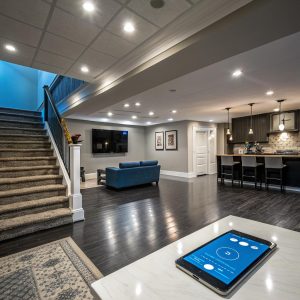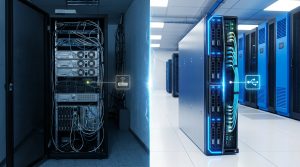
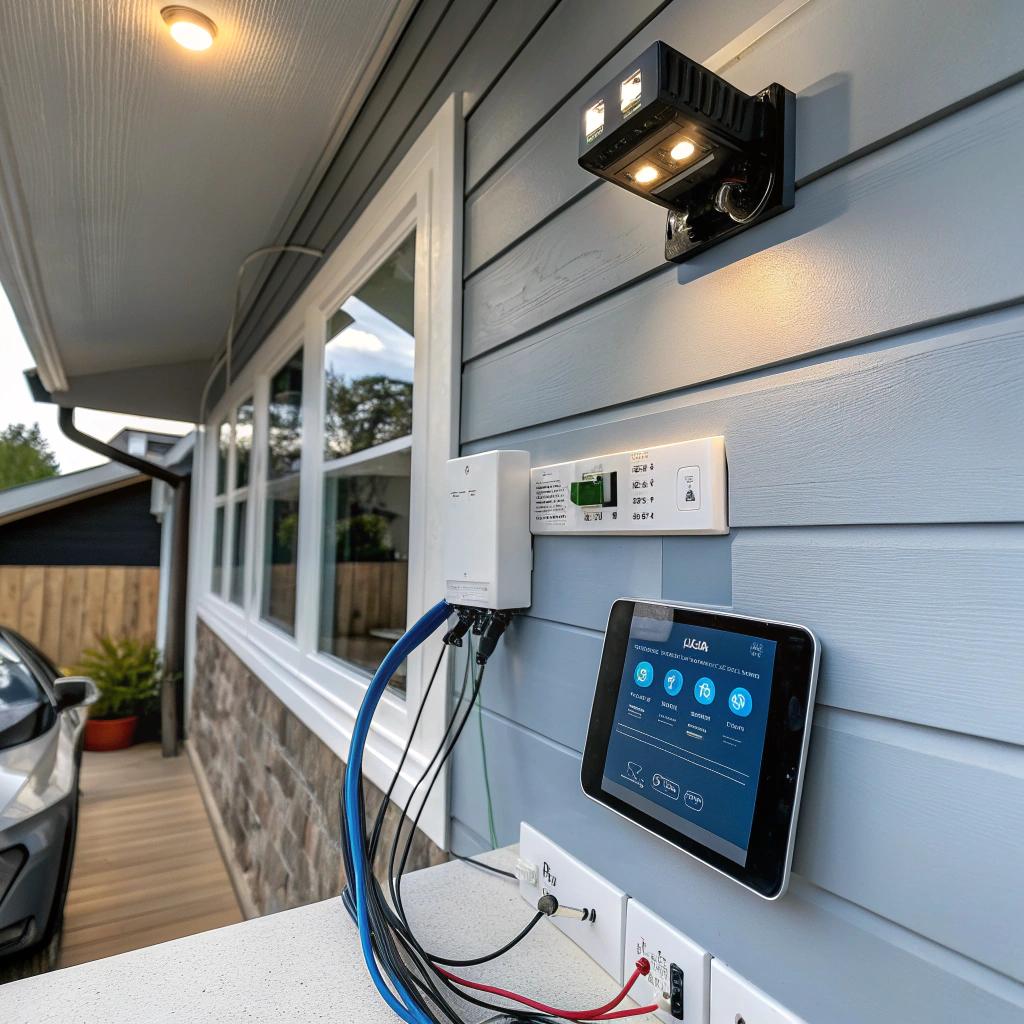

Most people think smart homes are just Wi-Fi plugs and a voice assistant. I thought that too, until I watched a router reboot every time someone ran a space heater in an old house. The problem was not the smart devices. The problem was the wiring and the way the power and network lived together. That is where good local electricians quietly decide if your “connected home” actually works or keeps glitching.
Smart connected homes in Des Moines run on two things: power and data. Electricians are the ones who build the power side and, more and more, prepare the house so the data side is stable and safe. The short version is this: a smart home that is reliable needs upgraded panels, dedicated circuits for heavy smart gear, low-voltage runs for access points, proper grounding, surge protection, and clean separation between noisy and sensitive lines. The people who make that all real are the local pros, like electricians Des Moines, who know both electrical code and how tech behaves in a real house, not just in a spec sheet.
They are not just installing outlets. They are planning where you will charge the EV, whether that PoE camera will drop power every time the dryer runs, and how your UPS, NAS, and home lab rack sit on the same service as a 20 year old furnace and a new induction cooktop.
If you run servers at home, host game servers for friends, or just care about latency in your VR setup, the electrician is closer to your digital life than your ISP is. Your smart home is only as “smart” as the circuits behind it.
How electrical work shapes smart and connected homes
When people talk about smart homes, they usually start with apps. But every connected feature rests on simple questions an electrician deals with:
- Where does the power come from?
- How stable is it?
- How much can this circuit really handle?
- What happens when something fails?
A smart lock does not feel very smart if it dies during a thunderstorm because the transformer shared a line with the garage opener and a chest freezer.
The way I see it, Des Moines electricians influence smart homes in four big ways:
1. They design power layouts that match how we use tech now, not in the 1980s.
2. They keep smart gear from tripping breakers or overheating panels.
3. They protect connected devices from surges and bad grounding.
4. They create space for low-voltage networks to live alongside high-voltage power without fighting each other.
Smart homes are not just about “more gadgets.” They are about treating electrical and networking as one shared system instead of two separate worlds.
People who care about web hosting or tech communities often overthink their router firmware and underthink their panel age. If your main breaker is older than your oldest server, it might be the weak link.
Main service and panel: the unseen smart home bottleneck
Most older homes in Des Moines were wired for a fraction of the gear we plug in now. Air conditioning, electric dryers, maybe a microwave, that was it. Now you might have:
- EV charger
- Induction range
- Rack server or NAS
- Multiple access points
- Smart lighting across most rooms
- Mini-split units
Your panel has to back that up.
Typical service sizes and what they really mean
Here is a simple table to give a sense of how panel capacity ties into smart home use.
| Service size | Common in | Realistic usage profile | Smart home impact |
|---|---|---|---|
| 60A | Older small homes | Basic lighting, few outlets, maybe gas appliances | Very tight. Serious limits on EVs, servers, and big smart loads. |
| 100A | Mid-century homes | Standard appliances, some window AC, not much heavy tech | Can run smart home, but EV and home lab together become risky. |
| 150A | Upgraded older homes | Central AC, more circuits, some high-power devices | Comfortable for moderate smart setups and one EV. |
| 200A | Newer or fully upgraded homes | EV, AC, electric range, home office, server rack | Plenty of room for dense smart devices and future tech. |
Electricians in Des Moines often start smart home projects by asking about the panel because everything else hangs off that choice.
If your panel is undersized, it does not matter how smart your thermostat is. The house is still “dumb” at the electrical level.
Upgrading from 60A or 100A to 150A or 200A is not just about “more power.” It is about having:
- More breaker spaces for dedicated smart circuits
- Better fault protection with modern breakers
- Cleaner grounding and bonding
People sometimes resist panel upgrades because they do not “see” the benefit. But if you host anything from home or run mission-critical gear, a modern panel is as important as a good UPS.
Dedicated circuits for always-on connected gear
Smart homes depend on devices that must stay on: routers, switches, servers, cameras, hubs, voice assistants, smart locks, and so on. The mistake many homes make is stuffing those onto random general-purpose circuits.
Electricians fix this by carving out dedicated circuits.
Why dedicated circuits matter for tech people
Think about your own setup. If you are reading a tech blog, you might have:
- Router and modem
- Core switch
- Home server or NAS
- PoE switch feeding cameras and APs
- Smart hub or home controller
Putting this stack on the same circuit as a vacuum outlet or hairdryer means random drops.
A good electrician in Des Moines will often:
- Pull a dedicated 15A or 20A circuit for network gear and home lab racks
- Place that circuit on a part of the panel less prone to nuisance trips
- Pair it with whole-house surge protection and sometimes a dedicated surge strip
This is not overkill. It is the same logic as putting refrigerators on their own circuits. You do not want your food tied to the same breaker as your Christmas lights.
If downtime annoys you more than a new breaker does, then a dedicated circuit for your network gear is not a luxury. It is basic planning.
There is also thermal load. When you have servers running 24/7 next to PoE gear, the power draw is steady. Electricians size wire and breakers for that continuous load, not just for occasional spikes.
Lighting: where smart meets safety and comfort
Smart lighting is usually the first step people take toward a connected home. It looks simple. Screw in a smart bulb, install a smart switch, done. But scale it, and the wiring questions get serious.
Smart switches vs smart bulbs vs smart panels
There are a few common patterns:
- Smart bulbs in regular fixtures
- Smart switches controlling standard bulbs
- Smart panels or relay modules hidden in walls or panels
Electricians see all of these, but they care about different issues than you or I usually do:
- Neutral availability in switch boxes
- Box fill limits when adding smart modules
- Derating when adding many devices in one multi-gang box
- Compatibility with dimmable loads, especially LEDs
Older Des Moines homes often do not have neutral wires in switch boxes. Many smart switches need that neutral. Without it, people hack in odd ways, which is not safe.
This is where an electrician might:
- Run new cable to add neutral conductors
- Suggest smart bulbs or battery switches instead of hardwired switches in specific spots
- Reconfigure multi-way switches so the smart device works properly
You might think this is “overkill wiring detail,” but if your automation scene does not always work the same way, you will care about these boring details very fast.
Smart outlets, USB, and charging stations
Smart outlets and in-wall USB ports look like small upgrades. They change user experience more than people expect, though.
Planning outlet locations around connected life
Des Moines electricians are starting to plan outlets not just around furniture, but around device clusters:
- Podcast or streaming corners
- Charging shelves near entries for phones and tablets
- Monitors and TV walls where people mount soundbars and consoles
- Home office setups with dual monitors and docking stations
Smarter planning here means:
- Less use of cheap power strips
- Shorter cable runs for low-voltage lines
- Cleaner current draw without wild spikes
Electricians also think about AFCI and GFCI protection in these spots, which keeps your smart home safer if a cheap charger goes bad.
Network and low-voltage: where electricians and tech people meet
On a site about hosting and digital communities, this is probably the part you care about most. You might already know your way around Cat6, PoE, and mesh networks.
Sometimes network pros ignore the electrician, and the electrician ignores the network. That separation creates all sorts of weird problems.
Structured cabling vs “wherever the cable fits”
Dropbox syncs faster over wired connections. VR streaming behaves better. Security cameras record more reliably. You know that. But how those cables are physically run matters.
When electricians and low-voltage techs work together, they can:
- Plan structured cabling from a central rack or panel
- Route cables away from high-voltage lines to reduce interference
- Reserve conduit runs for future fiber or newer cabling
- Make sure low-voltage boxes and high-voltage boxes share walls safely
Here is a quick comparison:
| Approach | Typical method | Real-world effect |
|---|---|---|
| Ad-hoc cabling | Patch cables through gaps, through doors, under rugs | Tripping hazards, random disconnects, ugly walls |
| Structured cabling | Home runs from wall plates to central rack, labeled | Predictable performance, easier troubleshooting |
| Electrician-coordinated cabling | Low-voltage planned alongside circuits, shared pathways | Cleaner install, less interference, ready for upgrades |
I have seen homes where the Wi-Fi dropped every time a vacuum ran, simply because the main data line was zip-tied to a vacuum circuit cable for 40 feet. Shielding helps, but physical separation is still king.
Power quality: grounding, surges, and sensitive hardware
If you run servers at home, you care about uptime and data safety. Many people obsess over RAID, backups, and off-site copies. They ignore grounding and surge protection.
Electricians do not.
Grounding and bonding
Grounding in homes is often half-understood. People think it is just about “not getting shocked.” It also affects:
- Noise on signal lines
- How surges travel during storms
- How isolated or exposed your network equipment is
In Des Moines, older homes might have mixed wiring types, old metallic water pipes, and partial upgrades. Electricians sort that out, fix loose or corroded ground connections, and make sure panels and subpanels share a clean path to ground.
If you have ever heard an audio system buzz when lights dim, or seen cameras glitch during lightning, bad grounding might be involved.
Whole-house surge protection
For smart homes, a single point-of-failure surge can be brutal. Losing a few smart bulbs is annoying. Losing your router, switches, server, and NAS in one hit is something else.
Whole-house surge devices live at the panel and help clamp big spikes before they hit individual circuits. They do not replace outlet-level protection, but they help a lot.
Electricians install and size these devices based on:
- Panel type and service size
- Local grid behavior and storm frequency
- How many sensitive loads the home has
People sometimes ask “Do I really need that?” For a home with a rack server, multiple PoE cameras, and a decent home lab, my honest answer is usually yes.
EV chargers, heat pumps, and the smart load juggle
Smart homes are shifting loads from gas to electric. EV chargers, induction stoves, electric dryers, and heat pumps pull real current. Layer smart gear on top, and load planning becomes serious work.
EV charging in a connected home
An EV charger can draw more than the rest of your smart devices combined. A 40A or 50A circuit adds new weight to the panel.
Electricians in Des Moines now often:
- Install 240V circuits with enough capacity for present and future chargers
- Pair chargers with smart load management devices
- Check that adding a charger does not overload existing service during peak use
Some chargers coordinate with the panel or a separate monitor to throttle charging when the house is under high load. This helps prevent tripping the main breaker when the AC, oven, dryer, and EV all want power at once.
You might not care about any of that. Until a friend is over, your site is running from your home lab, and the power drops mid-game because someone started a bake cycle.
Smart security: power for cameras, sensors, and locks
Cameras and sensors are central to many smart homes. They pull a strange mix of power: small loads, but everywhere, and some are critical.
Choosing PoE vs Wi-Fi cameras
From a tech point of view, many of us like PoE cameras. One cable, both data and power, easy management. Electricians often help prep for this kind of setup.
That can look like:
- Adding outlets in attic or basement near PoE switches
- Coordinating low-voltage cable paths to camera spots
- Ensuring the PoE switch sits on a reliable, protected circuit
Wi-Fi cameras push power to wall bricks all over the home. It works, but often clutters outlets and creates odd loading patterns.
Smart locks are another concern. If your main entry smart lock loses power, many people do not have keys on them anymore. Electricians help:
- Add low-voltage power for locks that support wired backup
- Ensure nearby outlets for hubs or bridges
- Plan pathways for any future wired power you might want
Working with code, permits, and real-world constraints
Smart home discussions often ignore building code. Electricians cannot. They have to follow the National Electrical Code and local interpretations, which shape what is even allowed.
Sometimes this clashes with what a home owner wants. For example:
- Overstuffing boxes to cram in smart relays is not allowed.
- Combining certain loads on multi-wire circuits might trigger code issues.
- Shared neutrals need proper handle-tied breakers.
I have seen ambitious DIY smart projects where the “solution” was ignoring basic code rules. It worked. Until it did not.
Electricians balance:
- What you want functionally (scenes, automations, sensors)
- What is legal and safe to wire
- What can reasonably be done in an existing home without full gutting
They might tell you no. That is not them being difficult for the fun of it. Sometimes the plan is just bad.
If your automation idea depends on ignoring code, the idea is flawed. The fix is not a more “flexible” electrician. It is a better design.
Smart homes and the home lab: planning for hosting from home
For a blog about hosting and tech communities, this part is probably where your life intersects most with local electricians.
If you run:
- A home Plex or Jellyfin server
- A small Proxmox or VMware cluster
- Self-hosted services like Nextcloud, Gitea, or Matrix
- Game servers for friends or a community
Then your home becomes a micro data center. Much smaller, sure, but with some similar needs.
What an electrician can do for a home lab
Here are concrete ways Des Moines electricians help with home labs and small hosting setups:
- Install a dedicated circuit (or more than one) for the rack
- Use higher quality outlets rated for frequent plug cycles
- Position the rack near a panel, or at least near clean power
- Coordinate with HVAC to handle the extra heat load from servers
- Add 240V circuits if you plan to use gear that benefits from it
People often underpower their rack, then regret it when they add a second UPS or switch. Planning this with an electrician early saves pain later.
I think it is fair to say: if your home lab matters to you more than your TV, you should treat its power plan with as much seriousness as a small business would.
Retrofitting older Des Moines homes vs building new
Des Moines has a mix of older homes and new developments. Smart homes work in both, but the effort is different.
Older homes
In older houses, electricians often face:
- Knob-and-tube remnants or mixed wiring types
- Cloth insulation or brittle conductors
- Limited panel space and small service size
- No neutrals in switch boxes
For smart features, that usually means:
- Choosing retrofit-friendly devices that do not need neutral
- Targeted rewiring in critical rooms like offices and server areas
- Gradual panel and branch circuit upgrades as budget allows
You might not get your dream setup in one go. A careful electrician can help you phase the work so you get the most benefit from each stage.
New builds
In new construction, everything is easier. Electricians can:
- Plan extra conduit runs for future wiring
- Install larger panels and subpanels from day one
- Place outlets and low-voltage boxes exactly where racks and gear will go
- Pull more circuits than the bare minimum
The small extra cost during construction can save a lot later. If you are building, pushing for 200A service and a real low-voltage plan is wise.
How to talk to an electrician about your smart home
Many tech-minded people are strong on the software side and weak on how to explain their needs in electrical terms. The gap can cause frustration on both sides.
Here are some tips that usually help:
Describe how you use the house, not just what you want to install
Instead of saying “I want 10 smart switches,” say things like:
- “I want certain lights linked to motion sensors so my kids are never in the dark in the hall.”
- “I host services from this rack that I really do not want rebooting by accident.”
- “We plan to add an EV within 2 years and probably a second one later.”
This gives the electrician context to suggest better solutions.
Share your tech map
If you have a home lab diagram or a network map, show it. Even if it is hand-drawn. Many electricians will actually appreciate it, because it reveals:
- Where your critical gear lives
- Which rooms or walls matter for Wi-Fi
- Whether you need extra outlets or circuits near your rack
This works both ways. You might see how small changes in your rack location make wiring much easier and cheaper.
Common myths about electricians and smart homes
People sometimes make assumptions about what electricians do or do not handle in the smart home space. Some of these are off.
Myth 1: Electricians only care about code, not about your tech goals
Some do focus on code and safety first, yes. But many actually like tech and enjoy projects that mix power and networking. The real problem is usually language. If you speak only in app features, and they speak only in amperage, you talk past each other.
Bringing diagrams, real usage patterns, and clear priorities helps close that gap.
Myth 2: You can DIY most smart stuff and only call an electrician for the big things
You can DIY a lot. That does not mean you always should.
Pulling low-voltage cable, setting up VLANs, and configuring Home Assistant are well within many tech people’s abilities. Tying into main panels and adding new circuits is another story. A mistake there can void insurance or worse.
I think the best mix is often: DIY the software and light low-voltage work, hire pros for anything inside the panel or that touches high-current devices.
Myth 3: Smart homes are mostly “plug and play” now
Wi-Fi smart plugs and bulbs are easy to start with, yes. The trouble comes when you scale:
- 40+ smart devices on Wi-Fi
- Multiple APs fighting interference
- Loads of tiny wall warts heating outlets
At that point, wiring choices, power planning, and physical layout matter more. That is the electrician’s domain, not the gadget’s.
Questions people in tech often ask Des Moines electricians
Q: I host small sites and game servers from home. What should I ask an electrician to do first?
A: Start with a panel and circuit review. Ask:
- If your service size is enough for current and near-future loads
- If a dedicated circuit for your network and server gear makes sense
- Whether whole-house surge protection would help your setup
Then place your rack or gear in a location that is easy to power cleanly and cool properly.
Q: Do I really need wired Ethernet in rooms if Wi-Fi 6 is strong?
A: It depends on your habits, but many tech people regret skipping Ethernet. Wired lines to:
- Your main TV or media area
- Your office
- Areas where you might run a rack or NAS
make things more stable. Electricians and low-voltage installers can pull cable while walls are open, which is far easier than later.
Q: Is a panel upgrade worth it just for smart home features?
A: If your panel is old, cramped, or undersized, the upgrade is about more than smart stuff. It is about safety and long-term flexibility. Smart devices just push you to face a problem you already had.
Q: How can I keep power issues from taking down my home lab or self-hosted services?
A: Use layers:
- Clean, dedicated circuit for the lab
- Whole-house surge protection
- Quality UPS with enough runtime for graceful shutdowns
- Good grounding and correct bonding in panels
The electrician mainly handles the first three. You handle the UPS settings and graceful shutdown.
Q: What is one thing people often forget to mention to electricians when planning smart homes?
A: Heat and noise from gear. Servers, PoE switches, even some UPS units give off noticeable heat and fan noise. Telling the electrician where that gear will live lets them think about ventilation, nearby circuits, and whether that spot makes any sense at all.
If you are honest, how many devices in your home would go dark right now if one random breaker tripped?