
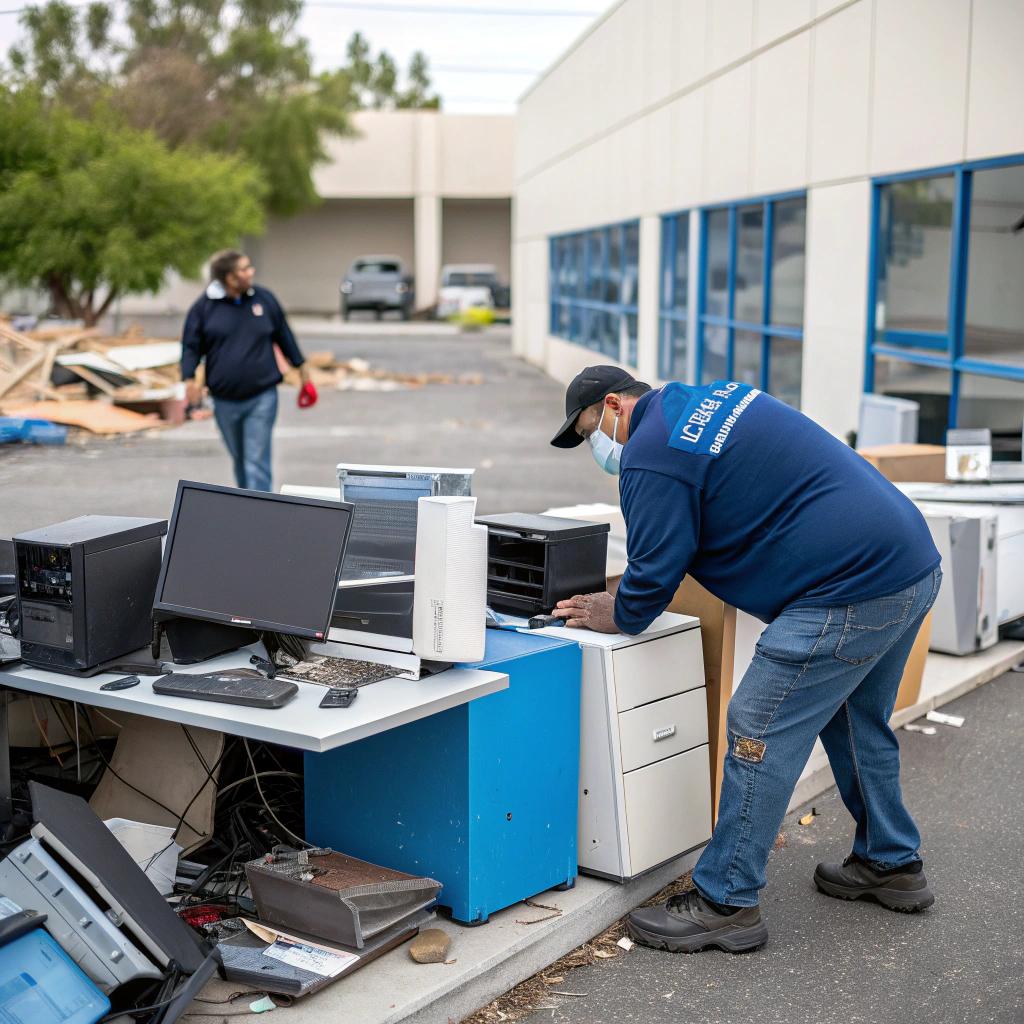

Most people think a tech office cleanout is just about tossing old chairs and a few dead monitors. I learned the hard way that if you treat it like regular junk, you risk data leaks, broken lease terms, surprise fees from your building, and a lot of angry messages from your ops team.
If you want the short version: a proper tech office cleanout in Boston means planning your asset inventory, backing up and wiping devices, sorting e‑waste from office junk, understanding what your building and city will actually let you throw away, then bringing in a local service like junk removal Boston MA to handle the heavy lifting, e‑waste runs, and recycling. The technical piece is making sure every device that ever touched production data is tracked, wiped with verifiable methods, and either resold, reused, or recycled through certified channels. Everything else flows from that.
Why tech office cleanouts are different from regular junk removal
If you run a dev shop, host small racks, or even just manage a remote‑heavy team that kept a hybrid office, your “junk” is not just junk.
Old hardware ties back to your infrastructure history. Laptops that once held SSH keys, whiteboards with half‑erased network diagrams, switches with saved configs, NAS boxes that someone swore they “already formatted.”
Treat every piece of hardware that ever touched production or customer data as a security item first and a trash item second.
Most Boston offices are in shared buildings with strict rules. You cannot just stack server rails and UPS units in the hallway and hope building management smiles and looks away. Some buildings in the Seaport or Back Bay will even fine you if you leave a single pallet in the freight area outside allowed hours.
On top of that, Boston has rules around electronics and hazardous waste. You cannot throw servers, UPS batteries, or monitors in regular trash. If you do, the building’s trash vendor will sometimes reject a load or charge extra. Your landlord will not enjoy that conversation.
So you have three overlapping concerns:
1. Data security
2. Compliance with building and city rules
3. Physical work of hauling everything out without wrecking your team for a week
Those three do not always line up nicely, which is why people tend to delay office cleanouts until the lease deadline is frighteningly close.
Step 1: Decide your real goal before you start
Different tech offices clean out for different reasons. The goal affects nearly every choice, from dumpster size to which hardware you keep.
Common goals for tech office cleanouts
- Closing the office and going full remote
- Moving to a smaller space
- Refreshing hardware after a capital purchase
- Clearing a data room to move to the cloud or to a colocation facility
- Preparing for an acquisition or audit
If you are shutting down the space, your bar is simple: leave the office in “broom clean” condition and secure all data. Everything that stays is a problem.
If you are moving, then it becomes more subtle. You might keep some networking gear, but replace office furniture. Or keep dev machines but decommission QA gear that never matched production anyway.
For a cloud move, you may keep your core switches, then retire storage arrays. Or the opposite if you are going hybrid. Every company is slightly different here, which is fine.
The mistake is to start hauling stuff out before deciding which category each item falls into: keep, sell, donate, recycle, or trash. Without that, junk removal turns into chaos.
Step 2: Build a hardware and furniture inventory
This sounds annoying and, to be honest, it is. But it will save you money and reduce mistakes.
I like a simple shared spreadsheet or lightweight inventory app. Nothing fancy. The point is not perfect asset management. It is having enough detail that you do not accidentally trash a node that someone still uses for a weird cron job.
What to include in the inventory
| Item type | Details to capture | Why it matters |
|---|---|---|
| Laptops / Desktops | Serial, user, OS, storage type, last backup date | Data wipe proof, mapping to owners, licensing |
| Servers | Hostnames, rack location, drives, roles | Avoid killing something still in minimal use or needed for logs |
| Networking gear | Switch/firewall/router types, ports, configs stored where | Confirm configs are backed up before disposal |
| Storage (NAS / SAN / external drives) | Capacity, RAID state, data type, encryption | High risk for leftover logs, PII, and secrets |
| Monitors / TVs | Size, type, condition | Decide resale vs recycling |
| UPS / batteries | Model, battery type, condition | Hazardous disposal; cannot go in regular trash |
| Cables / misc hardware | Racks, rails, shelves, patch panels | Some has resale or reuse value, most is scrap |
| Furniture | Desks, chairs, conference tables, condition | Plan hauling volume and possible donations |
You do not need perfect detail for every keyboard. The priority is anything that stores or routes data, plus anything large enough to affect volume or cost.
If an auditor or buyer later asks “What happened to server X or drive Y?”, your inventory is the answer you reach for.
Step 3: Handle data and device security first
All the physical removal is secondary to this. If your cleanout is neat but your disks are still readable, you have failed.
Backups before wiping
Before you wipe anything, confirm you have backups of:
- Production data and logs, stored according to your retention policy
- Infrastructure configs (routers, firewalls, switches, VPN appliances)
- Build systems, CI/CD configs, deploy scripts
- Internal tooling that might still hold keys or user data
If you still run on‑prem services, think about any weird legacy:
– Old wiki on a forgotten VM
– Jenkins box that runs one script nobody dares to touch
– License servers for older software
Once you are comfortable that backups exist and are tested, move to data destruction.
Disk wiping and destruction
Approach depends on disk type and how sensitive your data is.
For most tech offices:
– For spinning disks, use multi‑pass overwrite tools or your standard wipe tool, then keep a log.
– For SSDs, use the manufacturer secure erase function where possible.
– For anything holding customer data that could create legal or PR trouble, consider physical destruction: shredding or drilling, with a certificate from the vendor that handled it.
If you are small, this might feel overkill. But a leaked disk from an office cleanout can bite years later.
If you cannot prove a device was wiped or destroyed, assume the data might still be out there.
Label wiped devices clearly. A simple sticker with “WIPED”, date, method, and initials is fine. Keep a basic log that maps serial numbers to wipe status. It does not have to be complicated, just traceable.
Step 4: Sort items into clear categories
Once the data side is handled, the physical cleanup is much easier if you sort in place.
I usually use five simple categories and mark areas of the office with tape and paper signs.
The five main piles
- Keep: Going to the new office or home offices
- Sell: Good resale value (recent laptops, newer monitors, pro AV gear)
- Donate: Usable but older equipment and furniture
- Recycle: E‑waste and scrap metal that should not go to landfill
- Trash: Truly broken items and non‑recyclable junk
For a tech office, the line between recycle and trash matters. Boston expects electronics, batteries, fluorescent bulbs, and some metals to go through proper channels, not regular trash.
Your junk removal company can often separate this for you, but you still need a basic idea of what must be handled differently. Old network gear, dead UPS units, and giant CRTs (if you somehow still have those) belong in a different stream than chairs and Ikea desks.
Step 5: Know your building and Boston rules
Every office building in Boston seems to have its own personality. Some are very strict, others are relaxed until something goes wrong.
Before you schedule trucks or junk removal crews, talk with:
– Building management
– Your landlord or property contact
– The regular trash vendor, if your office deals with them directly
Questions to ask:
– Which days and time windows can heavy items move through the freight elevator?
– Do you need a certificate of insurance from the junk removal company? Nearly always yes.
– Are there limits on weight per trip in the elevator?
– Does the building have existing e‑waste or recycling programs that you must use or at least be aware of?
– Where can trucks park, and for how long? Boston streets can be a problem here, especially near downtown or the Seaport.
If you ignore these, your crew might show up with a truck and sit outside burning time while your ops lead argues with the front desk.
On the city side, check Boston guidelines for:
– Electronics and e‑waste
– Hazardous materials
– Construction debris, if you are also removing walls or built‑ins
You do not need to become an expert here. You just need to avoid doing the obviously wrong thing like throwing a stack of servers into regular dumpsters.
Step 6: Decide what you handle in‑house vs with a junk removal service
You might be tempted to have your devs “just help” for a day or two. That can work, to a point.
Tech teams are usually good at:
– Identifying devices
– Handling wipes
– Safely shutting down and removing gear from racks
– Packing fragile electronics
They are usually not great at:
– Carrying heavy desks and servers down stairs or into trucks for hours
– Figuring out how to stack a truck load without damage
– Dealing with building staff, parking, and timing logistics
So it makes sense to let your team handle the technical parts, then bring in a junk removal crew for the heavy lifting, hauling, and disposal.
A local crew that knows Boston traffic, loading zones, and transfer stations can save you a lot of stress. They also usually have relationships with recycling facilities and can help keep things out of landfill where possible.
Choosing a junk removal partner for a tech office
When you talk to junk removal companies, be direct and quite specific. A normal office cleanout is not the same as a partial data center teardown.
Ask questions like:
- Have you handled offices with server racks, UPS units, and large network gear before?
- Can you provide proof that e‑waste goes to proper facilities?
- Can you handle batteries and UPS units safely?
- Do you provide certificates for recycling or destruction, if needed for compliance?
- Are your crews comfortable working around shared buildings with tight elevator schedules?
If you care about sustainability, ask what percentage tends to be recycled or donated. Answers will vary, and sometimes recycling depends on the condition of the item.
Also, be cautious with pricing that looks too low. Often that means little sorting effort, more dumping, and sometimes surprise fees.
Step 7: Timing your cleanout with your project or move
Tech teams tend to underestimate how long an office cleanout will take. There are network diagrams on whiteboards, boxes of weird cables, and lab equipment nobody has touched since the last migration.
A rough schedule that works for many teams:
4 to 8 weeks before exit date
– Confirm lease end date and move‑out requirements.
– Decide what your future setup looks like. Fully remote? Smaller office? Different city?
– Start hardware inventory and tagging devices.
– Plan data backups and retention.
2 to 4 weeks before exit date
– Complete data wipes for any devices already retired from active use.
– Start packing nonproduction items: extra monitors, spare cables, unused furniture.
– Get quotes from junk removal services and lock in a date.
– Reserve freight elevator and loading dock time with building management.
Last 1 to 2 weeks
– Migrate live services to cloud or new office, if you still run any equipment onsite.
– Power down and remove remaining racks, UPS units, and network gear.
– Separate everything clearly into keep / sell / donate / recycle / trash areas.
– Have junk removal crews come in waves if needed, not all at once on the final day.
If you leave everything for the last 48 hours, you will have a bad time. You also risk missing something critical, like a forgotten firewall doing VPN duties for a partner.
Step 8: Special handling for on‑prem and hybrid setups
For readers used to web hosting and digital communities, a lot of your life might already be in the cloud. But some teams still run:
– Build servers
– On‑prem caches
– Backup appliances
– Old hosting hardware that predates the current cloud setup
Cleaning out a room that used to serve production is different from cleaning out marketing’s area.
Checklist for decommissioning technical areas
- Shut down services in a controlled way and confirm cutover to new systems.
- Export or mirror last‑minute logs, metrics, and configs.
- Label every cable before removing, if any part of the system will be reused elsewhere.
- Drain and disconnect UPS units safely, then label them for special disposal.
- Remove rack gear starting from the top to avoid instability.
- Confirm no one is still using any local Wi‑Fi APs, DHCP, or DNS servers.
Once the technical space is dark and empty, your junk removal crew can come through without fear of pulling the plug on something live.
Step 9: What to do with reusable gear
You probably have items that still have real value:
– Reasonably current laptops and desktops
– Modern switches, access points, and routers
– Large monitors and 4K TVs
– Meeting room hardware like camera bars or speakerphones
You have a few options.
Resale channels
You can sell to:
– IT asset recovery companies that buy in bulk
– Refurbishers that handle smaller quantities
– Direct buyers, if your team has time to list and ship, which many do not
The tradeoff: more effort usually means slightly more money. Many teams accept a smaller payout from a single buyer to save time.
Donation options
For older but still working equipment, donations can be interesting. Schools, nonprofits, and community labs sometimes accept decent hardware, if it is not too old.
You must still:
– Wipe all data and remove any asset tags or company stickers
– Provide basic specs so the recipient can judge usefulness
– Coordinate pickup or drop‑off, which can be tricky during a big move
If donating sounds nice but you are too stretched, ask your junk removal partner whether they route usable items to charities. Some do, and some just throw everything in the same stream.
Step 10: Handling furniture and non‑tech junk
Even in a very digital company, furniture tends to take most of the physical volume.
Common items:
– Desks and sit‑stand frames
– Rolling chairs in various states of disrepair
– Filing cabinets nobody has opened in years
– Whiteboards and cork boards
– Kitchen gear: fridges, microwaves, coffee machines
Many of these are heavy and awkward, so they are perfect for a junk removal crew.
Make a quick condition pass:
– Keep or sell premium desks and good chairs for the new space or home setups.
– Offer usable items to employees first, with clear deadlines.
– Route clearly broken or stained items to the junk area.
Buildings often require that floors be free of adhesive pads, cabling, and fixtures. Plan some extra time to:
– Remove cable trays stuck under desks
– Patch small wall holes from mounted TVs or whiteboards
– Clean up adhesives from wire clips on floors and walls
This is boring work, but it can make the difference between getting your deposit back or not.
Budgeting for a Boston tech office cleanout
Costs vary a lot by:
– Size of the space
– Number of heavy items and e‑waste
– Floor level and ease of elevator access
– Parking and loading dock situation
– How much sorting you do yourself versus leaving to the crew
You can think of costs in three buckets.
Direct cleanout costs
– Junk removal company fees, usually by volume, weight, or a hybrid
– Specialized e‑waste and hazardous material disposal fees
– Optional secure destruction for drives and tapes
Indirect internal costs
– Staff time for inventory, wiping, and packing
– Lost productivity during the cleanout window
– Potential overtime close to the move date
Hidden or surprise costs
– Building fines for breaking rules on loading or leaving junk in hallways
– Extra fees from trash vendors for contaminated loads
– Damage to elevators, walls, or floors if heavy items are handled poorly
A clear plan and a decent partner usually reduce surprises. But some are hard to avoid, especially in older Boston buildings with tight stairwells or strange access paths.
Practical tips for tech teams planning a cleanout
Here are some practical details I wish more teams thought about.
Do not trust “we will remember” for device history
That one weird server that “nobody uses” sometimes runs a critical cron job. When in doubt, check:
– Network monitoring
– DNS and DHCP logs
– SSH known hosts or jump host configs
If you see recent connections or traffic, treat it as live until someone owns the migration.
Color code zones and piles
Simple tape and signs help avoid mistakes:
– Green area: going to new office
– Yellow area: pending decision
– Red area: confirmed junk/recycle
You do not need perfect rules. You just need something better than “we stacked stuff near the window.”
Keep your tech people near the junk crew at first
For the first hour of hauling, have someone from IT or ops walk with the junk removal crew. They can answer questions like:
– “Is this AP still in use?”
– “Are these loose drives wiped?”
– “Is this rack going or staying?”
After that, patterns stabilize and the crew can work with less supervision.
Treat cleanout day like a minor outage
Even if most systems are already in the cloud, expect some disruption:
– People are distracted
– Networks might change as equipment is moved
– Meeting spaces get taken over by boxes and bins
Schedule noncritical work. Give people room to focus on either cleanout or core tasks, not both at once.
What web hosting and digital communities people should pay extra attention to
If your work revolves around web hosting, SaaS, or running communities, some details hit closer to home.
Logs, backups, and forgotten storage
These often hide in:
– Old backup appliances that no one shut off cleanly
– External drives used for “temporary” migrations
– USB drives passed around at some point during an incident
Logs can contain IPs, session tokens, or other sensitive context. Backups can hold entire databases. During a cleanout, it is easy to toss a box of drives without thinking too much.
Have a simple rule:
No storage device leaves the office until it is either wiped, physically destroyed, or explicitly tagged for secure transfer.
That includes:
– Old NAS boxes
– Laptops that never enrolled in MDM
– Developer test machines with production copies from old days
Community data and exports
If you ran any forums, Discord logs, or private communities that lived on on‑prem systems at some point, confirm that:
– Historical exports are accounted for
– Any moderation or legal archives are handled according to your policy
– You are not leaving behind drives with partial user exports
You might never need that data again, but if you are expected to retain or protect it, a random drive in the trash is a real problem.
Handling communication around the cleanout
People do not like surprises when their favorite keyboard or monitor disappears. You also do not want last minute “wait, I was still using that” fights.
Set a clear internal communication pattern:
– Announce the cleanout plan early, including rough timelines.
– Share which areas will be affected on which days.
– Give a hard date by which personal items must be removed.
– Clarify what hardware employees can take home, if any, and how.
For anything related to data or community assets, have a short written note that covers:
– What is being deleted or destroyed
– What is being retained and where
– Who owns final decisions
This does not need legal polish, just enough that people understand the intent and process.
What a “good” tech office cleanout outcome looks like
You probably will not do this perfectly. Most teams do not. But a reasonable outcome looks like this:
– All hardware that ever held production or user data is either wiped with proof or destroyed.
– The office is empty, clean, and meets the lease move‑out conditions.
– Your team does not lose weeks of productivity to hauling furniture.
– Usable gear either finds a second life or is recycled, rather than all going to landfill.
– There is a minimal set of questions months later about “what happened to that server or drive.”
You will still discover a random box of cables, or some forgotten Raspberry Pi, or a laptop trapped in a cabinet. That happens. The difference is that these small items are low risk if the big pieces were handled with some care.
Common questions about Boston tech office cleanouts
Q: Can we just put old monitors and servers in our building dumpster?
A: In Boston, no, not if you want to stay on good terms with your building and the city. Electronics are supposed to go through proper e‑waste channels. Your junk removal company should know where to take them.
Q: What if we are mostly cloud and have very little hardware?
A: You still have endpoints: laptops, a few networking devices, and probably some old storage or backup gear. Your cleanout will be simpler, but the rules about wiping and disposal still apply. You just need fewer truckloads.
Q: Do we really need certificates for drive destruction?
A: Not every team needs formal certificates. If you operate in regulated spaces, work with large clients, or have an acquisition in progress, then certificates and basic logs are very helpful. For a very small shop, consistent internal records and photographs of destruction might be enough, but it is safer to get documentation when someone else handles it.
Q: How early should we contact a junk removal company?
A: Contact them once you have a decent sense of your volume and timelines, ideally three to four weeks before your final move‑out. Earlier conversations help you understand what they need from you, like photos, access details, and building rules.
Q: Can employees just take equipment home during a cleanout?
A: Yes, sometimes that is a good way to reduce waste, but only after devices are removed from your asset list and either wiped or enrolled into your remote management. Letting people walk out with untracked laptops that still have internal data is a recipe for headaches later.
What is the one part of your office you are most worried about cleaning out: the racks, the random storage closet, or the mountain of old monitors?