
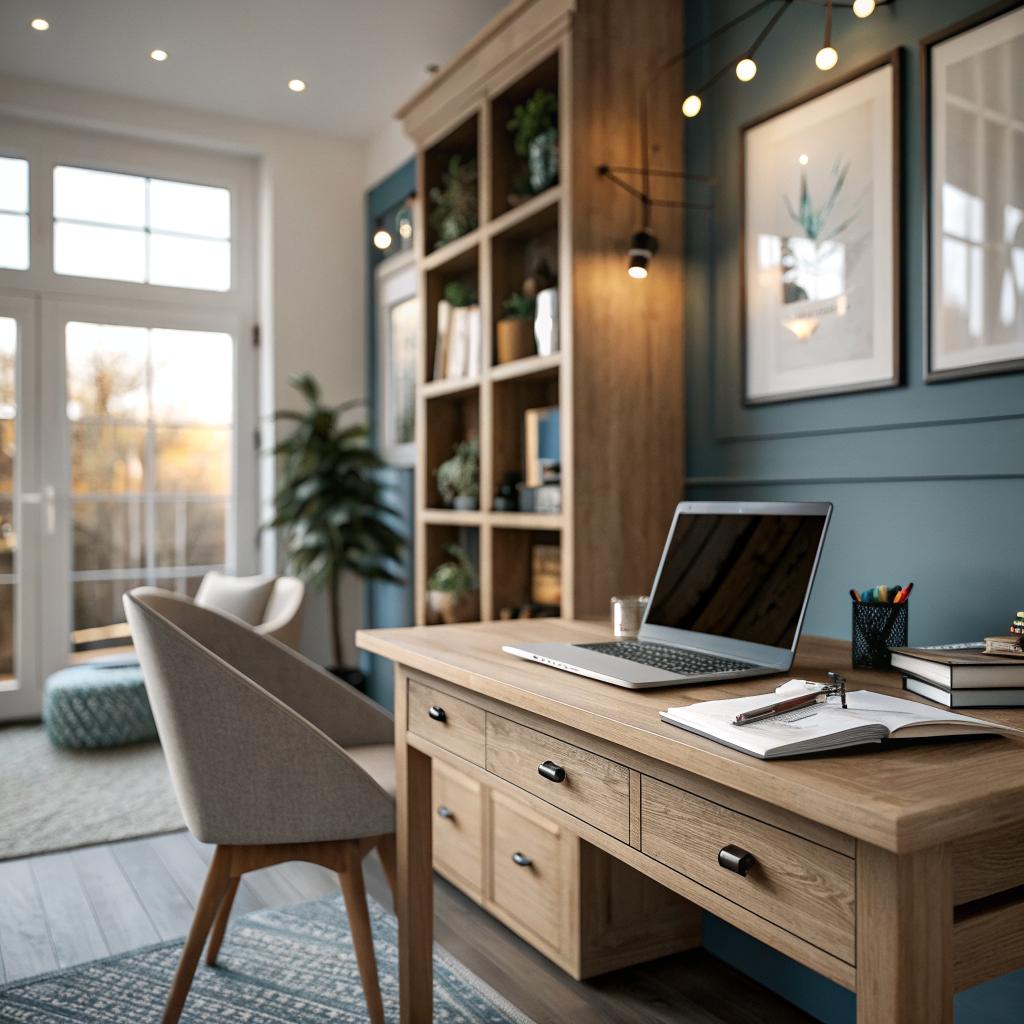

Most people think a smart home office is all about the gear: the big monitor, the fast Wi‑Fi, the fancy chair, and maybe some colored LED strips hidden behind the desk. The surprising thing is that none of that matters much if the room itself is badly built. I learned that the hard way, and so did the carpenter I am going to talk about. If the walls are wrong, the desk is flimsy, and the cables have nowhere to go, even the best PC or server feels slow and messy.
If you want the short answer: a good carpenter in Boston builds a smart home office by starting with your tech stack and work habits, then shaping the physical space around them. They plan wall cavities for Ethernet, power, and rack gear. They design the desk height for your monitor setup and keyboard angle, not for some generic catalog photo. They think about cooling for your NAS or home lab, cable routing for your routers and switches, and sound control for video calls. They ask what you host, where your backup drives live, and how often you need to reach them. The woodwork and layout follow the wiring and the workflow, not the other way around. That is the real trick.
If you are deep into web hosting, run your own servers, or help run online communities, this way of thinking probably feels familiar. You would not shove a production database under a random VPS. You plan the architecture first. A smart carpenter who understands tech does the same with your room.
And if you want to see what that looks like in practice, look at how a good carpenter Boston clients trust approaches a single room that needs to act like a studio, a dev station, and a quiet meeting space all at once.
How a carpenter starts: not with wood, but with your stack
Every tech‑heavy home office has a few fixed constraints:
- You need screens at the right distance and height.
- You need power and network ports where they do not turn into a trip hazard.
- You need a place for always‑on hardware that will not cook itself.
- You need quiet for calls, streams, and meetings.
A carpenter who takes smart offices seriously will start by asking odd questions that sound more like system design than home renovation.
Questions like:
- What are you actually running at home: a gaming PC, a small home lab, or full VMs and containers for client projects?
- Are you hosting anything yourself, or is it all on shared hosting / VPS / cloud?
- Do you need a 10G wired backbone in the office, or is Wi‑Fi fine?
- How often do you plug in new gear, swap drives, or re‑rack things?
- Do you record podcasts or stream? How often are you on camera?
If a carpenter is not asking some version of these, they are guessing. You would not accept that from someone configuring your DNS or server stack. You probably should not accept it from someone cutting into your walls.
A smart home office only works if the construction follows the tech, not the other way around.
That might sound obvious, but many home offices are still built like old study rooms, just with better screens. You end up with a nice desk and nowhere proper to put the router, the switch, the UPS, the NAS, and whatever self‑hosted experiments you keep adding over time.
Room layout as if you are laying out a small data center
Imagine you are planning a tiny rack layout. You want good airflow, easy access to ports, and clear cable paths. The same logic applies to the room:
- The desk is your main “rack front”.
- The wall behind or under the desk is your “patch panel” zone.
- A closet, built‑in cabinet, or side unit can serve as a mini data corner.
The carpenter looks at the room and picks:
- Where the “noisy” tech lives: UPS, NAS, server, external drives.
- Where the human stays: desk, chair, microphone, camera.
- Where the cables move between those two worlds with the least mess.
You do not need complicated language here. The goal is simple: short cable runs, clear airflow, and fewer tripping hazards.
Building the desk around your monitors, not around the wall
Most store‑bought desks are just slabs. A carpenter can build one that understands you live on your screen.
They will look at three basic numbers first:
- Your height.
- Your chair height and how you like to sit.
- Your monitor size and how many screens you use.
From that, they can find good desk dimensions.
Here is a basic reference table that a careful carpenter might sketch out with you.
| User height | Suggested desk height (sitting) | Suggested monitor eye level relative to desk | Recommended desk depth for 27″ dual screens |
|---|---|---|---|
| 5’4″ to 5’7″ | 27″ to 28″ | Monitor top at or slightly below eye level | 28″ to 30″ |
| 5’8″ to 6’0″ | 28″ to 29.5″ | Same rule: top at eye level | 30″ to 32″ |
| 6’1″ to 6’4″ | 29.5″ to 31″ | Top of monitor slightly below eye level | 32″ or more |
These are not strict rules, but they are better than what you get from random office furniture descriptions.
A carpenter in Boston who understands smart setups will usually:
- Ask whether you use a sit‑stand frame, and build a custom top that fits your tech layout.
- Drill accurate holes or channels for monitor arms and cable grommets so you are not stuck with ugly plastic caps.
- Add a back lip or shallow shelf to support screen mounts and keep them stable against the wall.
- Integrate clip‑on, under‑desk trays for power strips and low‑voltage gear.
If you constantly move your keyboard, mouse, and laptop to make space for other things, the desk is not built for your work.
A carpenter who listens to how you work will shape the desk for that. Not for what looks clean in a catalog photo.
Built‑in cable paths, not afterthoughts
You know how many people end up with a “temporary” cable mess that becomes permanent. That happens when the room gives you nowhere better to route the wires.
A carpenter can:
- Cut clean, wide grommet holes behind the monitors, not just in the center of the desk.
- Build a recessed channel along the back edge of the desk that hides cables and small power bricks.
- Mount a solid cable tray under the desk, sized for your actual brick count, not just a single strip.
- Use removable panels under or behind the desk, so you can reach wiring without crawling on the floor.
You may think you will manage the cables later with zip ties and Velcro. That usually means you will curse later while trying to trace a single Ethernet line in a dark, dusty knot. Better to have the carpenter give the wires a proper path from day one.
Planning network, power, and hardware like you plan hosting
If you are into hosting or dev work, you are already used to planning for redundancy and growth. Your home office needs the same thinking.
Here is where a good carpenter and a good electrician usually work together. The carpenter cares about the walls, cabinetry, and access panels. The electrician cares about load, grounding, and code. You care about not losing work during a power glitch.
Treat your home office like a small, noisy data corner that happens to include a comfortable chair.
Power: more outlets, smarter placement
Too many smart offices end up with one crowded strip at floor level and a tangle from there. A better layout often includes:
- Quad receptacles at desk height, behind and slightly below the work surface.
- Separate lines for high‑draw items like space heaters, window AC, or large printers.
- Outlets near your “data corner” or mini rack, not just near the desk.
- At least one outlet dedicated for UPS / battery backup.
A carpenter can frame the wall for extra boxes, hide conduit paths, and build surface channels or raceways that look like part of the room, not an afterthought.
Network: treating Ethernet as first class, not backup
Wi‑Fi is fine for casual browsing. It is not ideal when:
- You self host services at home and care about latency.
- You upload large media or backup archives regularly.
- You work in dev and need fast access to local test environments.
A Boston carpenter who gets this might plan:
- Wall cavities that can carry Cat6 or Cat6a to your router area cleanly.
- A small recess or niche for a patch panel near the desk, with enough slack for future runs.
- Concealed wall plates behind your main workstation and any secondary desk.
On a practical level, this feels simple: you just have Ethernet ports where your machines live. But behind the drywall, it is the carpenter who made sure there is enough space, no weird studs blocking access, and no awkward bends.
Cooling and airflow for your gear
If you run a home lab, a media server, or anything that tends to run hot, you already know heat creeps up on you. A carpenter can help more than you might expect.
They can:
- Build an open‑back cabinet or rack corner that lets hot air escape at the top.
- Leave proper clearance behind the NAS and UPS for airflow and cabling.
- Create discreet vent openings in built‑in units so gear does not suffocate.
- Plan furniture so your tower PC does not sit on thick carpet blocking its intake.
Is this construction? Yes. Holes in wood, vent grills, and clearances are all built decisions. A smart carpenter will think about your server temperatures, not just your color scheme.
Sound, privacy, and call quality
If you are in tech, you probably spend a good slice of your week in video calls or voice chats. Yet many people work in rooms that sound like tiled bathrooms.
A carpenter cannot fix everything, but they can do a lot.
Surfaces that are less echo‑friendly
Good audio starts with the basics:
- Hard, flat walls reflect sound and create echo.
- Soft, irregular surfaces break it up.
Without turning your office into a studio, a carpenter can:
- Add shallow wall slats or wood paneling behind you that scatter reflections.
- Build bookshelves into side walls that act as diffusers once filled.
- Use door frames that close tightly instead of hollow, loose doors.
They might not call it “acoustic treatment” in fancy terms. They just talk about “making it less echoey”, which is fine, because that is what matters.
Door and wall tweaks for privacy
If you host community calls, record podcasts, or just need to focus, small tweaks help:
- Solid core door instead of a flimsy one.
- Weatherstripping around the door frame to cut air gaps.
- Double studs or added insulation on a shared wall, if you are doing bigger work.
These are not magic, but they help you sound more professional on calls and feel less self conscious when talking.
Storage that respects your hardware and your clutter habits
A lot of people underestimate how much stuff they collect once they get into tech more seriously. Cables, old routers, spare drives, test devices, microphones, tripods, light stands, you name it.
If the storage is bad, it all ends up stacked in random boxes. Then you buy the same cable three times.
Here is where a careful carpenter shines.
If you cannot find a cable or drive in under 30 seconds, your storage is wrong, not your memory.
Different zones for different items
A smart home office often has:
- Everyday access storage for items you touch weekly.
- Deep storage for archival gear and parts.
- Secure storage for backups and sensitive documents.
A carpenter can split this into:
- Drawers within arm’s reach for things like cables, notebooks, and small tools.
- Upper cabinets or high shelves for older gear you rarely touch.
- A lockable small cabinet for backup drives, password notebooks, or hardware keys.
If you tell the carpenter you own multiple external drives, a NAS, and a stack of Raspberry Pi boards, they can design spaces that match each of those. It sounds almost trivial, but the difference between “some shelves” and “shelves planned for your stuff” is huge.
Hardware shelves and mini racks
For web hosting fans and home lab people, storage is not just for paper and pens. You may have persistent hardware that needs to stay plugged in, running, and accessible.
A carpenter can build:
- A small 12U rack nook under or beside the desk.
- A side console with open fronts and backs, sized for a mini tower, NAS, and UPS.
- Sliding shelves for gear that you occasionally swap or service.
If you try to stack this gear on a regular bookshelf, cables start to sag, fans get blocked, and you have to move three things to reach one port. A proper built‑in fixes that quietly.
Lighting for code, calls, and content
Tech people often fix bad lighting with cheap lamps or desk lights. That works for a while. But if the room is being built or remodeled, it makes sense to do it properly.
You do not need to be a photographer, but you probably care about:
- Not getting headaches from glare on white IDE themes or browser windows.
- Looking less tired on video calls.
- Being able to read notes or write by hand without strain.
Layers of light
A carpenter does not wire the lights, but they shape where lights can go and how they look.
Together with an electrician, they might aim for:
- Ceiling lights that are diffuse, not harsh spot beams straight onto your monitors.
- Soft wall lights behind the camera side for better call lighting.
- Channels or recesses where you can later add LED strips out of direct view.
If you stream or record videos, they can also frame a small overhead mount point where you can attach a key light or camera arm without relying on wobbly clamps.
Managing natural light
In Boston, daylight length swings a lot between seasons. A carpenter can help with:
- Built‑in window seats or shelving that frame blinds or shades cleanly.
- Recessed curtain tracks that let you fully block light for screen‑heavy tasks.
- Desk placement that avoids direct glare on screens during common work hours.
Again, it sounds small. But if you are tired of squinting at your screen every sunny afternoon, these things matter more than yet another monitor upgrade.
Blending smart tech into the woodwork
“Smart home” talk gets a bit overhyped sometimes. You do not need an app for your office chair. But there are a few pieces that work well when they are thoughtfully built into the room.
Power strips, hubs, and docks hidden in plain sight
You probably use:
- USB hubs or Thunderbolt docks.
- Charging bricks for phones, tablets, and your main laptop.
- Maybe a few single‑board computers for experiments.
A carpenter can:
- Create small recessed pockets on or under the desk to hold these permanently.
- Route power to them behind panels so you never see the brick part.
- Drill exact‑size cutouts so cables exit exactly where you need them.
You might think you can just clamp these later, and you can, but the difference in daily tidiness is pretty large when the furniture expects you to have this gear.
Mounting points for screens, arms, and sensors
Smart offices now often include:
- Multiple monitors on arms.
- A webcam or camera on a boom.
- A microphone arm.
- Maybe a small sensor panel or wall tablet.
If you mention this early, a carpenter can:
- Add internal bracing behind the wall where monitor arms will mount, so they never wobble.
- Strengthen the desk edge where clamp arms will grab, so it does not crush or chip.
- Prepare neat cable channels exiting near those mounts.
Suddenly your wall can hold everything securely without ugly anchors and guesswork.
Thinking ahead: your office in three years, not just today
If you work in hosting, dev, or any tech‑heavy area, you know your setup will not stay frozen. You may:
- Add another monitor.
- Move from a single tower to a server plus thin client.
- Start running Kubernetes at home for learning and labs.
- Launch side projects that demand more storage.
A carpenter who sees that coming will build in headroom.
Physical “scale up” paths
You might hear a contractor say “plenty of capacity”. To make that concrete, you can ask for things like:
- Extra conduit or cable paths in the wall, left empty for future pulls.
- Desk width that allows another 24″ or 27″ screen later.
- Cabinet depth that fits larger NAS units or future UPS boxes.
- Spare power outlets near gear zones that sit unused at first.
You can compare this to overprovisioning a server slightly. It costs a bit now, but saves you from a painful rebuild later.
A layout that can flip roles
You might start as a solo developer and then begin hosting client calls regularly. Or you start primarily in code and later lean into content creation.
The carpenter can design your office so it flips roles with few changes:
- A plain wall behind you on camera now that can accept panels, shelves, or art later.
- Desk placement that allows adding a second “presentation” area to the side.
- A storage wall that can either hide or showcase your gear depending on how you arrange it.
Think of it like leaving room for refactoring. You do not need to know the final design of your career, but you know it will not be static.
Where many smart home offices quietly fail
You might read all this and think: “I can handle it with a few IKEA hacks and some cable sleeves”. Sometimes you can. But certain recurring patterns show up where DIY falls short and a skilled carpenter could help.
Here are a few common failure areas:
- Power strips on the floor behind the desk, half buried in dust.
- Monitors slightly too high, causing neck strain after long coding sessions.
- Nowhere to put the big printer except on the floor or a wobbly side table.
- NAS or always‑on machines in closed cupboards with poor ventilation.
- Walls that flex or crack around heavy monitor arms because there is no backing.
- Bare walls that make you sound like you are in a bathroom on every call.
None of these look dramatic in photos, but they show up in your daily comfort and focus.
A carpenter who builds home offices for tech people sees these patterns. They design against them. It is less about “fancy custom wood” and more about honest problem solving.
A real‑world style scenario
Imagine a Boston developer who:
- Works remote four days a week.
- Runs a small home lab: one tower server, a 4‑bay NAS, a few Raspberry Pi boards.
- Helps moderate a couple of online communities and sometimes records screen‑share videos.
- Uses three monitors, one vertical for logs and chat.
Their current office:
- Basic desk pressed against a wall.
- Router and switch sitting on the floor, cables around their feet.
- NAS on a shelf near the ceiling, hard to reach and awkwardly loud.
- Single overhead light that glares on the screens.
They call in a local carpenter. What changes?
The carpenter suggests:
- Custom desk built wall‑to‑wall, slightly deeper, with a raised rear shelf for monitors.
- Under‑desk rack nook on the left, ventilated, for the NAS, switch, and UPS.
- Cable grommets placed behind each monitor cluster, plus an under‑desk tray.
- New built‑in shelf across the opposite wall for books, storage bins, and sound diffusion.
- Solid core door with better sealing to keep the room quieter during calls.
They also coordinate with an electrician to:
- Add two new quad power outlets just above desk height.
- Pull Cat6 lines from the main router area to a clean patch panel by the rack nook.
The result is not some Instagram showpiece. It is just a room where:
- Every cable has a path.
- Every device has airflow.
- Every screen is at a comfortable level.
- The background on calls looks intentional rather than accidental.
From the outside, it looks simple. From the inside, the stress level drops. That matters more than one more spec bump on a CPU.
Questions people often ask about smart home offices and carpenters
Is it overkill to involve a carpenter for a single room?
If your office is where you spend 30 to 50 hours a week, it is not overkill. You would not hesitate to pay for good hosting if your site is your income. The same logic applies to the room where you earn that income.
The mistake is to think it is just a desk and a chair. Once you factor in:
- Back and neck comfort.
- Call quality.
- Hardware access and cooling.
- Reduced clutter and distraction.
the value becomes clear. That said, if you rarely work from home, then a full custom build might be more than you need. You should be honest with yourself about that.
Do I need a carpenter who is into tech, or will anyone do?
You do not need someone who runs Kubernetes at home, but you do benefit from someone who:
- Understands what Ethernet, NAS, and UPS gear are.
- Has built offices or studios before.
- Asks detailed questions about your devices and habits.
If a carpenter insists that Wi‑Fi is always enough, or that you can “just put the server in a cupboard”, that is a red flag. You want someone who at least sees why you care about wired connections and cooling.
What should I prepare before talking to a carpenter?
You can save time, and get better results, if you:
- List every device that will live in the office, from PC and monitors down to NAS and hubs.
- Sketch your current desk layout and what annoys you about it.
- Note your typical weekly schedule: how much coding, how many calls, any recording.
- Take photos of setups you like, not for style only, but for function.
Bringing this to the first meeting gives the carpenter a clear starting point. It is a bit like writing a decent bug report instead of just saying “the site is slow”.
How much should I focus on looks compared to function?
People often swing too far either way. Some chase a perfect minimal look and hide everything, only to find it annoying to actually plug in devices. Others ignore aesthetics and end up with a cluttered cave.
Function should come first. You need the room to support your work. But looks matter for mental clarity and how you appear on camera. Healthy tension between the two is good. If the carpenter always defaults to what “looks clean” without regard to access, push back. If you catch yourself caring only about RGB and not about where the UPS will live, you might need to adjust too.
Can a smart office help me separate work and personal life?
To a point, yes. When the office is designed with clear zones and storage, it becomes easier to:
- Shut down and physically leave work gear where it belongs.
- Avoid creeping piles of work hardware into your living area.
- Keep distractions out of view when you are in deep work mode.
It will not fix every boundary issue, that is partly a habit problem. But a room that “feels” like work during work hours and can fade into the background after hours helps more than people expect.
If you think about your own setup right now, what is the single most annoying physical issue you deal with every day? That is probably the place where a thoughtful carpenter could give you a surprisingly good return on the effort.